
In the Tradition of Liberty.
In the Tradition of Liberty.
In the Tradition of Liberty.





FUSION’s archive of commentary.

By
Scott Winship’s analysis of American labor supply evolution over the past century provides a valuable view of the interplay between historical labor trends and modern economic conditions. His work not only captures shifts driven by economic prosperity but also delves into the complex impact of automation on work dynamics. Winship begins by examining the significant reductions in work hours that occurred due to increased productivity and regulatory changes, particularly the Fair Labor Standards Act of 1938. These shifts marked an era where improved labor efficiency and new regulatory frameworks combined…
By
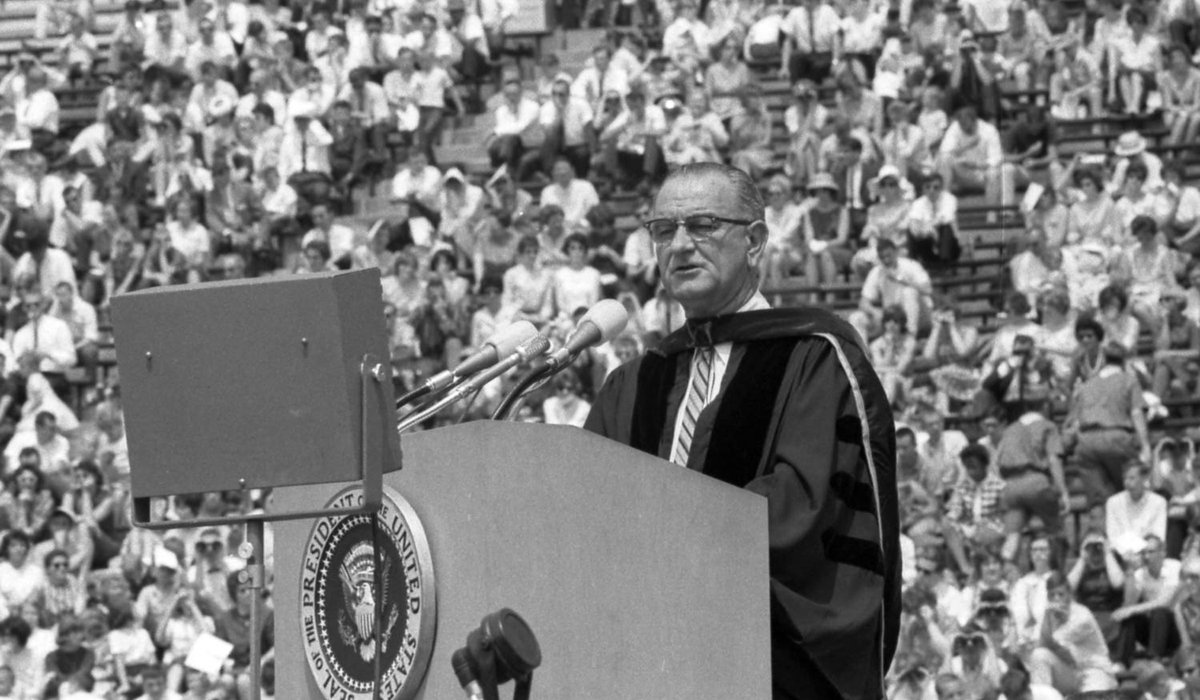
Although it would take some months more to bring to fruition, the public unveiling of the Great Society—which turned 60 this year—is usually taken to be Lyndon Johnson’s 1964 commencement address at the University of Michigan. Just six months since he had been sworn in as JFK’s successor, and with election in his own right not yet under his belt, Johnson’s vision was as much a campaign promise as a policy document. Nonetheless, the basic argument of the speech foreshadowed the coming revolution in domestic policy. America, Johnson told the assembled…

By
Abutting a large military base in Northern Virginia is a small, squat wooden building. The Woodlawn Meetinghouse, as it known, has been the center of a Quaker community for nearly 200 years. It originated as a kind of experiment—in the 1840s, Quaker farmers bought land that once belonged to George Washington, aiming to show that free labor could outcompete slavery even on former plantations. But over the years, the project sputtered. The Civil War extinguished its raison d’être, agriculture gave way to suburban sprawl, and the government snapped up what…
By
Scott Winship’s “America is Still Working” takes a comprehensive look at the U.S. labor market over the last half-century and finds a cup half-full. For example, against claims that the American worker has suffered under decades of wage stagnation and under-employment, Winship marshals compelling data showing that poverty is at historic lows while earnings and job quality are at historic highs. Wage growth may have been slower for non-college educated men, but he contends this was largely driven by the stupendous growth in female labor force participation eroding the male…

By
Nicholas Mosvick published an interesting essay in Fusion reassessing the legacy of Wisconsin senator Joseph McCarthy and the anticommunist movement more broadly. While McCarthy’s efforts to unveil the genuine threat of communism and the Soviet Union ought to be appreciated by any American conservative, Mosvick unfortunately goes too far in his defense of the period’s populist style. Even at the time, leaders within the conservative movement had plenty of doubts about “Tail-Gunner Joe” and his politics of fear. There are better anticommunists to admire and promote today. Strangely, Mosvick does not…

By
Donald Trump and his supporters are often called populists, although Trump himself does not use the term. In some quarters, calling someone populist implies badness. But is populism inherently bad? Populist comes from the Latin word populus, which means the people. A political movement is populist, however, not merely because it claims to advance the good of the people. All political movements claim that. A recent New York Times article by Noah Millman drew a connection between populism and charisma, noting that “populist movements from Brazil and Mexico to France…

By
Scott Winship has made a career out of challenging the conventional wisdom about U.S. economic trends as unduly pessimistic. He has argued that widely cited numbers purporting to show sharply rising inequality, a decades-long stagnation in incomes, and plummeting upward mobility are inaccurate—and that better data and methodologies paint a significantly rosier picture. In this new essay, Winship looks at long-term trends in the U.S. labor market—and once again pokes holes in various gloomy assessments of where things stand. Here he focuses on the shifting rises and drops in male…

By
Sometime recently we came to the end of the era of 9/11 movies. Our politics have changed, as have the generations and the preferred technologies for entertainment. We are also ready, perhaps, even to forget that there was an attempt to destroy the World Trade Center, along with other iconic locations. So this is the right time for a review of the one moment in the 21st century so far when art and politics could come together for Americans. The major productions that first confirmed this possibility were Oliver Stone’s…

By
Sometimes it seems like Americans can’t decide whether we work too much or too little. We hear that because of rising inequality and a lack of good jobs, workers must toil too many hours at wages too low to support a family. By other accounts, the machines— if not robot overlords, then at least their touchscreen-kiosk cousins—are already beginning to take our jobs. Women work more than in the past. But is that because of the declining pay of their husbands, or is it a reflection of greater economic freedom? …

By
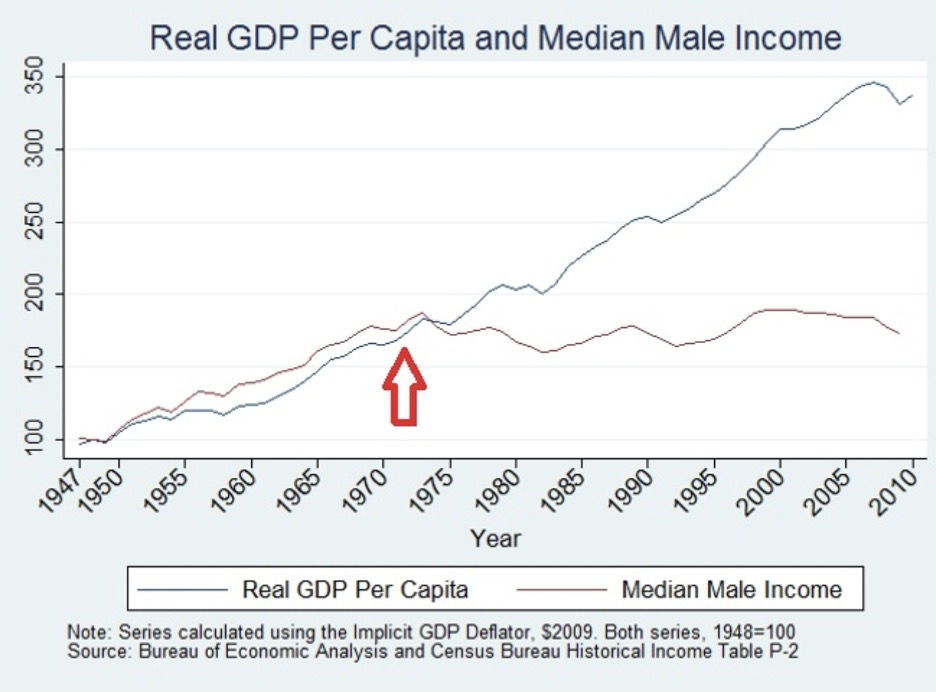
Outside of some circles of monetary economists, August 15 often passes by unnoticed. It should be remembered because that date commemorates a massive overnight change in US monetary and fiscal policy. Fifty-three years ago, on August 15, 1971, President Nixon announced to the world that “I have directed Secretary Connally to suspend temporarily the convertibility of the dollar into gold or other reserve assets.” This “temporary suspension” is still in place today. Since 1971, monetary and fiscal policy have become increasingly entangled. With the “temporary suspension” the final link…