
In the Tradition of Liberty.
In the Tradition of Liberty.
In the Tradition of Liberty.





FUSION’s archive of commentary.
By
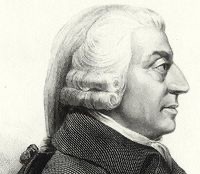
This year marks three centuries since Adam Smith’s birth. Conferences have been convened, articles commissioned, and books published to celebrate the occasion. It’s one thing to give symbolic tributes to Smith. But should we actually be reading him? His ideas were undoubtedly central to the development of modern economics, and he clearly influenced policy discussions in Britain and beyond. But does he still have something to offer us today? Such questions aren’t limited to Smith. Writers, teachers, and scholars face continuing challenges to the relevance of older texts, especially so-called…

By
In a realm as susceptible to fads and novelties as education, it can be difficult to perceive when the tectonic plates underneath us are shifting and really fundamental changes are taking place. Over the past decade or so, education policymakers have gone all in and then back out again on a bewildering number of reforms, including performance pay for teachers, “grit” and “growth mindset,” project-based and cooperative learning, social-emotional learning, mindfulness, restorative justice, anti-racism, and – coming any day now, we are told – an AI revolution. But just beneath…

By
The so-called friend/enemy distinction is in vogue. Once limited to graduate seminars, the phrase, derived from the German political theorist Carl Schmitt, is increasingly used as an explanation for political turmoil, not just in authoritarian regimes such as China and Russia, but also liberal democracies such as the United States. From academics to journalists, talk of the ‘enemy’ and other Schmittian concepts has been gaining more and more ground. As is often the case, popularization of the term has led to it being applied incorrectly. Originally intended to describe conflicts…

By
On September 17, 1787, after protracted disputations, members of the Constitutional Convention gathered in Philadelphia and signed the final draft of the document that became the Constitution of the United States of America. With this document and its first set of amendments, ratified in 1791, the framers were taking the unprecedented step of making the new republic a laboratory for religious liberty. Indeed, the majority of the framers were so committed to this principle that they denied any future government the right to interfere in religious matters. The original Constitution…

By
Few American events are as synonymous with summertime as the caravan of blockbusters that annually take over multiplexes. Since at least the mid-1970s, the public has become accustomed to seeing a very particular type of motion picture when the weather turns warm: those ungainly, often gargantuan epics of action, fantasy, and spectacle. In economic terms, these productions operate something like the federal budget—they cost a fortune to produce, and they are expected to bring in a fortune—and what they promise is not so much entertainment, and certainly not enlightenment, as…