







Many writers level the following challenge at liberalism: it must either betray itself or fail to defend itself. Remain tolerant, and it will fall to the intolerant; become intolerant, and it will cease to be liberalism. Remain neutral, and it will fall to the militant; become militant, and it will cease to be liberalism. Critics of liberalism often press either (or both) of these charges. To be a liberal, they say, is to be a loser, a toothless or gutless naïf. Or to be a liberal is a mere pretense, cloaking a substantive agenda or even a desire to dominate.
But liberalism isn’t uniquely targeted by this type of criticism. Any moral or political system that demands we treat others in a certain way regardless of whether they do the same for us runs a risk of unilateral disarmament—that is, of being a patsy, a sucker, a dupe. The same worry runs through the history of Western thought, from Socrates convincing his friends that drinking hemlock was the right thing to do to the contrast in Thucydides between the Athenians’ cultured deliberation at home and their imperial realism abroad to the Song of Roland’s Archbishop Turpin, who smashes Saracens next to the knights Roland and Oliver. Fear of unilateral disarmament is present in Machiavelli, who worries that being moral might mean giving up a tool others won’t give up, and in Nietzsche, who worries that being moral might mean giving up a tool others don’t have to begin with, like an eagle who agrees to a lamb’s rules against predation. Economic and game-theoretic accounts of the emergence of morality also present it as a “tit-for-tat” transaction, in which our “cooperation” is premised on the expectation that the other party won’t be a “defector”.
The problem goes deeper than liberalism, then. Morality itself seems to demand that we not mirror others’ treatment of us. To be moral often means continuing to uphold certain standards of behavior toward others no matter how egregious their transgressions might be. And even if we see a long-term advantage in such behavior, someone must be the first to cooperate.
How then can virtue prevail? How can someone who can only tell the truth win against someone who might either tell the truth or lie, whichever works best? Aren’t moral people bringing a knife to a gunfight? Treating politics as a quest for power without permanent constraints is called “realism” in some academic fields. Isn’t morality unrealistic?
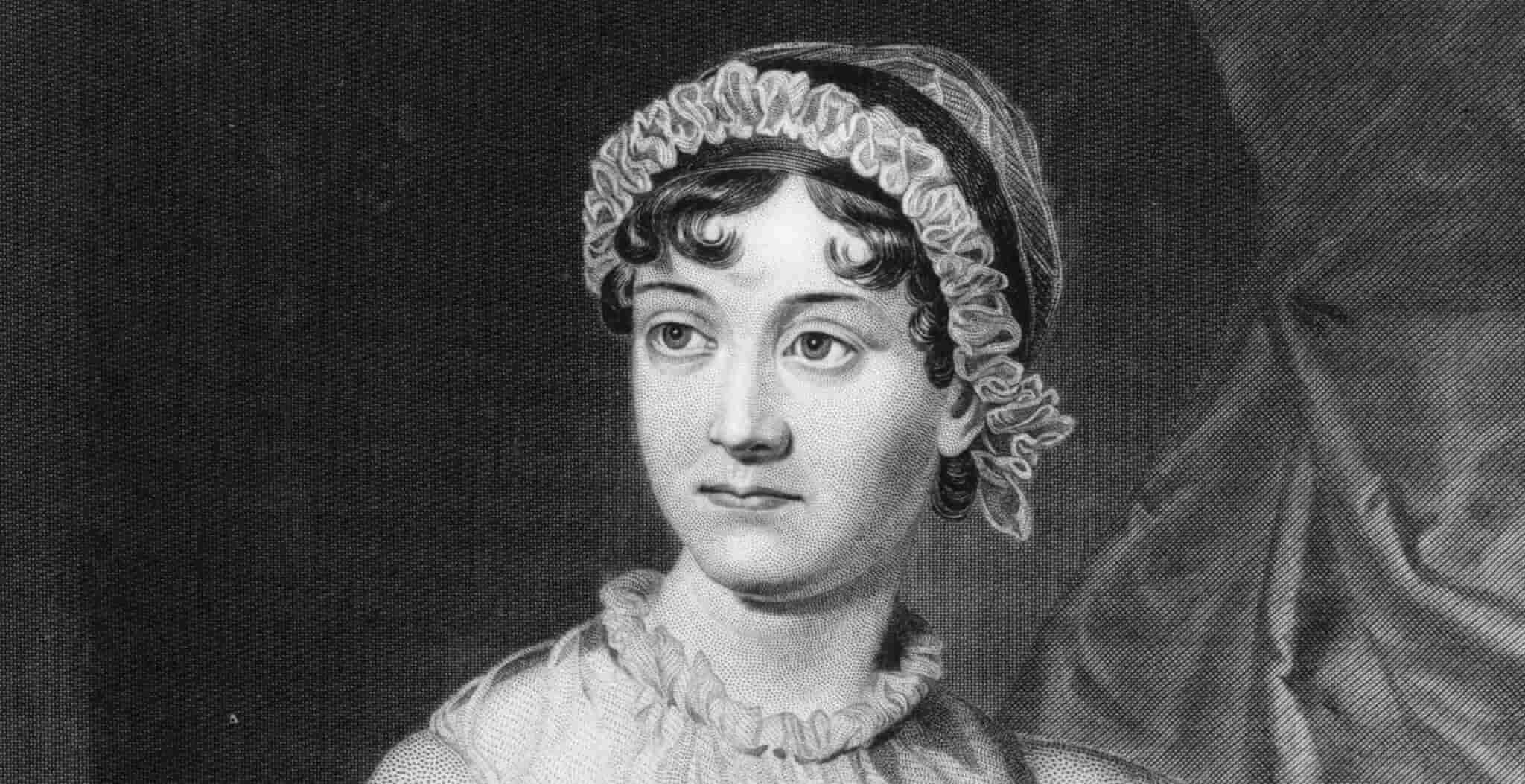
We recently celebrated the birthday of an author who believed otherwise. The question of how virtue can win out over vice runs through the novels of Jane Austen. Virtue, as Austen sees it, faces two tough challenges. First, people whose characters are not yet formed must see how to be virtuous rather than vicious. Then, the virtuous must somehow find a way to succeed in their struggles against the vicious without adopting vicious means.
These tasks are made more difficult by the fact that the most vicious, by means of the tricks that their vice licenses, may appear to be the most virtuous. They may be, to use one of the best words in the English language, “disarming”. In fact, this is precisely the sort of deception that Machiavelli recommends to the ambitious.
Yet Austen rejects Machiavelli’s acceptance, and perhaps endorsement, of inescapable and unlimited competition. Instead, she seems to suggest that a liberal society makes it possible for virtue to come out victorious. Frequent and uncoerced commerce illuminates people’s characters in a way that a single, forced encounter would not. For Austen, a kind of liberalism that includes commerce gives us the opportunity to choose to continue dealing with those who act well, while avoiding those who do not. Under liberal conditions of voluntary association and personal responsibility, virtue turns out to be armed with more weapons of self-defense than it initially seems.
The question of how virtue can prevail is raised directly in Mansfield Park. Edmund, a second son, plans to join the clergy, like several other Austen heroes and villains. His crush, Mary Crawford, can’t stand his choice of profession, saying: “I must look down upon anything contented with obscurity when it might rise to distinction.” Edmund responds: “But how may it rise? – How may my honesty at least rise to any distinction?”
“Honest” is not Austen’s most interesting adjective for this virtue, though. The one she uses most provocatively is “artless.” That is how Lady Susan describes her daughter Frederica in Lady Susan, how Catherine Morland is described twice in Northanger Abbey, and how both Fanny and her mother are occasionally described in Mansfield Park. Most of all, Harriet Smith is described as “artless” six times in Emma, sometimes by Austen, sometimes by Knightley, but always approvingly. The term isn’t used in Pride and Prejudice, but that book does contain discussions of “art” in seduction and in falsehood. For instance, Darcy writes to Lizzy that he “condescended to adopt the measures of art so far as to conceal from [Bingley] your sister’s being in town.” (Though it doesn’t seem to have had a negative connotation back then, Austen used the word “condescend” almost exclusively with reference to pretension or puffery, and especially in reference to Darcy’s aunt.)
It is easy to think of Austen’s novels as love stories. That’s not quite accurate. Sense and Sensibility’s Marianne enters marriage “with no sentiment superior to strong esteem and lively friendship,” but finds herself soon in love, against her expectations, because she is a loving person. Lizzy of Pride and Prejudice meditates on “gratitude and esteem [as] foundations of affection” as opposed to love at first sight, which has gone poorly for her, thus “authoris[ing] her to seek the other less interesting mode of attachment.” Proposing to Emma’s Emma, Knightley says: “You understand my feelings – and will return them if you can,” rather a different thing than asking if his feelings are already returned. In Mansfield Park, Fanny, who has, mysteriously to the other characters, rejected Henry Crawford, ends up closer to accepting his proposals: “Her influence over him had already given him some influence over her. . . . Had he done as he intended, and as he knew he ought, . . . he might have been deciding his own happy destiny.” Lady Susan, an antagonist, expresses disdain for this sort of generality of and gratitude for love, just as she had for her daughter’s artlessness: “I shall ever despise the man who can be gratified by the passion which he never wished to inspire.”
Because love of the virtuous appears to come so easily to the virtuous, most of the action in most of Austen’s novels consists in figuring out and dealing with the bad people, except in Emma, where the action consists rather in Emma herself figuring out how to be good. A persistent problem is that etiquette often counsels against exposing bad etiquette. Characters in Mansfield Park, Sense and Sensibility, Pride and Prejudice, and Persuasion keep quiet about others’ transgressions to some extent or another, worsening their own prospects in doing so. In particular, Fanny cannot explain to her uncle why she cannot marry Henry Crawford, as it would implicate his daughter, Maria, in a highly inappropriate flirtation, and cannot tell Edmund about Mary Crawford’s morbid optimism regarding his brother’s illness, as it was expressed in private correspondence. So Austen’s “artless” protagonists are worse than honest: they must stay silent on precisely those topics where exposure would advantage them.
Antagonists, on the other hand, overshare and take the offensive. Lizzy notes too late in Pride and Prejudice how overeager Wickham was to give his account of his acquaintance with Darcy. Lucy Steele corners Elinor in Sense and Sensibility to tell her the secret of her engagement to Edward, making her a very unwilling confidante. John and Isabella Thorpe in Northanger Abbey are quite open in their machinations, and the vile Eltons of Emma are constantly airing their opinions of the people and things around them. Austen’s protagonists spend a lot of time sitting and listening, almost under attack from the words and wishes of others.
Yet there is something about being artless that draws people in. Anne Elliot begins Persuasion as “nobody with either [her] father or sister,” and Fanny similarly near the beginning of Mansfield Park “felt herself becoming too nearly nothing to both [her female cousins].” By the end, though, people “seemed to look to [Anne] for directions,” and Lady Bertram “talks of [Fanny] almost every hour.” When Edward honors his engagement to Lucy Steele despite his mother’s disapproval and the fact that he himself does not want it and loves Elinor, Elinor “gloried in his integrity” rather than regretting the engagement’s maintenance.
The very notion that integrity can be the object of romantic glory is provocative. But it fits Sense and Sensibility, which might justly be considered a novel about, in Elinor’s words to Marianne, “the propriety of some self-command” – her own having been described as “invariable.” In the same novel, Colonel Brandon is described early on by Willoughby, his rival, as having “every body’s good word, and nobody’s notice…” But this changes by the end: Elinor says that “his character . . . does not rest on one act of kindness . . . To Mrs. Jennings, to the Middletons, he has been long and intimately known; they equally love and respect him; and even my knowledge of him, though lately acquired, is very considerable.”
Integrity, self-command, and the generality of love hold Elinor back from the sort of romantic yearning her sister indulges in. When Marianne finds out about Edward’s engagement, she says: “And yet you loved him!” And Elinor replies: “Yes. But I did not love only him; – and while the comfort of others was dear to me, I was glad to spare them from knowing how I felt.” She adds: “The composure of mind with which I have brought myself at present to consider the matter, the consolation that I have been willing to admit, have been the effect of constant and painful exertion.” When romantic affection rests, as Austen seems to think it should, on rational esteem of another person’s virtues, our other loving attachments, whether of esteem or (more problematically for Austen) of blood, must affect how it expresses itself in our lives. The early sign of the inappropriateness of Willoughby and Marianne’s relationship is their disregard for propriety in entering the house of Willoughby’s aunt, Mrs. Smith. Elinor’s self-control, on the other hand, derives from a broader sentimentality in which her family features heavily.
This ability to love others as we should is more generally attractive, even to some antagonists. When Fanny is reunited with her brother in Mansfield Park, “it was a picture which Henry Crawford had moral taste enough to value. Fanny’s attractions increased – increased two-fold – for the sensibility which beautified her complexion and illumined her countenance was an attraction in itself . . . She had feeling, genuine feeling.” It is Crawford’s moral taste which is most activated by Fanny, despite his own questionable character, and it is in the context of her selfless and innocent love for her brother that the phrase appears. To love, it seems, is an essential part of what a good person does.
In Austen, better people are better able to esteem others. Edmund says of Crawford: “His heart was reserved for you. And I must say, that its being for you has raised him inconceivably in my opinion.” For loving someone who deserves it, Frederica of Lady Susan is called deserving of a good match herself: “The girl whose heart can distinguish Reginald De Courcy, deserves, however he may slight her, a better fate than to be Sir James Martin’s wife.” Austen’s best characters often acquire good things through their ability to distinguish them rather than possessing the resources to purchase them.
The relation between self-interest and accurate perception of virtue underlies our need to form judgments about one another. In Austen, we are all like used goods in vintage shops, with no tags or brands. You have to recognize the good stuff before you can get it. Better assessments of character thus lead to better company. Of Austen’s novels, Pride and Prejudice most effectively dramatizes the struggle to form judgments, contrasting as it does a sister who has trouble forming a negative opinion of anyone with a main character who has trouble forming a positive opinion of anyone.
At times Austen’s characters seem to have developed such moral sensitivity that their discriminations take a few moments for us to understand. Edmund, for instance, falls out of love with Mary Crawford because she has criticized Henry and Maria’s affair on pragmatic rather than moral grounds: “She saw it only as folly, and that folly stampt only by exposure.” Elinor perceives immediately that Lucy Steele’s overtures toward friendship are actually meant to torture her. In Emma, Emma’s dislike of Jane Fairfax and Knightley’s dislike of Frank Churchill are at least explained by the fact that the two of them are hiding their engagement. In Persuasion, Anne’s distrust of her cousin is prompted not by his past antipathy toward her family but by the fact that he can give no principled answer as to why his feelings have changed. Having been told at one point by this cousin that her standards are too high, she finally, in Austen’s most genuinely romantic story, is reunited with her teenage love, who when they first met “had nothing but himself to recommend him.”
So virtue is more important in love than sentiment for Austen. And throughout her novels, Austen links this virtue to economic activity. Antagonists are consistently profligate, whereas heroes and heroines know how to budget and save.
The first we hear of Anne Elliot is that she “considered it as an act of indispensable duty to clear away the claims of credits with all the expedition which the most comprehensive retrenchments could secure, and saw no dignity in anything short of it.” The first sign that John Thorpe is not to be trusted in Northanger Abbey is that he exaggerates the price of his carriage; Wickham in Pride and Prejudice turns out to have accrued gambling debts.
Acquired wealth looks much like rational esteem to Austen. It represents a store of value which serves as a record of the degree to which someone can be relied upon. (Northanger Abbey even includes a little quip about the idea of a “faithful promise,” noting that only a performance can be faithful.) Generational wealth, however, seems to have a more stultifying effect, as does inactivity in general. Edward bewails the lack of “active profession” which led to the “foolish, idle inclination” of his first engagement. Sir Thomas “feared that principle, active principle, had been wanting; that [his children] had never been properly taught to govern their inclinations and tempers by that sense of duty which can alone suffice.” Mr. Bennet criticizes himself similarly in Pride and Prejudice.
The relationship between moral virtue and social freedom, particularly our uncoerced choices in love and friendship, is thus not so different from familiar pictures of the relationship between economic value and economic freedom. As more and more people make assessments about whom they’ll associate with, social status becomes more and more reliable, and particularly becomes more reliable than the older system of rank. Socializing begins to seem almost like a kind of responsibility. When we frequently absent ourselves from the social world, we can end up free-riding on other people’s judgments when we re-enter it.
If love is tied to esteem, and esteem to virtue, we can see why Austen’s novels seem to express a moral prohibition on marrying for any other reason. In marrying, we inevitably communicate a judgment as to another person’s character and company, and force that judgment on others who must also end up in the position of associating with them. So marrying without love is almost like a kind of lie–a sort of price fixing, but for people. In any particular case it is shocking, but practiced widely it would destroy the whole system.
In the end, this is a deeply liberal vision of virtue and its strength. Being taken advantage of in a few transactions because of one’s artlessness opens up a vast array of further transactions which that very artlessness has made available to them. The market’s judgment is a moral one: an assessment of whether we are worth dealing with. The artless person may have fewer tools, but they will have more allies, because a partnership with them carries no risks of betrayal or dishonesty. When those potential allies can choose for themselves who to associate with, it is natural to think, at least for Austen, that these kinds of factors will be decisive.
Virtue can prevail, in Austen, because it is what we all can depend upon. Manners, good looks, and wealth all fail pretty quickly, and so they gradually lose their appeal. Those who choose to be virtuous are excellent, but perhaps the best people are those artless ones who can’t help it. Austen’s quiet heroes and heroines raise themselves to the sort of distinction and consequence disdained by her antagonists by being worthy of the free, repeated choices of those around them. Marriage is focal for being the most central and the most lasting of these choices, the most transformative transaction, for its symmetry, and for its resolution into a single outcome, which for Austen, I think, represents a kind of unique and uniquely final demonstration of what we take a good person to be.
About The Author
