







After 250 years of independence, the meaning of the American Revolution is still contentious. Coming so soon after the peak of woke hysteria in 2020, there has been a flood of bad history following the wake of the 1619 Project. As we celebrate the Semiquincentennial, it is the perfect time to reflect on the true origins of American independence. This means taking seriously the history of ideas. Socio-economic change, personal interests and prejudices, and pure dumb luck certainly played their part as they have done throughout history. But there was a genuine and sincere interest among the Founders in how to create the best possible form of government that we must understand on its own terms.
This does not mean defending a hagiographical account of American independence, relying on old clichés and outdated narratives. The best way to honour the Founding is to develop a rich and comprehensive understanding of the ideology behind independence. That is what made the works of Bernard Bailyn and Gordon Wood so distinctive. American independence is the product of a combination of ideas that is both ancient and modern, republican and liberal, conservative and radical.
We are used to referencing Thomas Paine’s Common Sense and Cato’s Letters when discussing the ideology of American independence. The Enlightenment and early liberalism were profoundly influential for the Founders. But there were other crucial sources that were widely valued at the time, and later generations have neglected. One such source were the Tory writers of Georgian England who criticised the Whig oligarchy led by Sir Robert Walpole. It might seem counterintuitive for American patriots to owe an intellectual debt to a set of figures usually associated with royal prerogative and the established church.
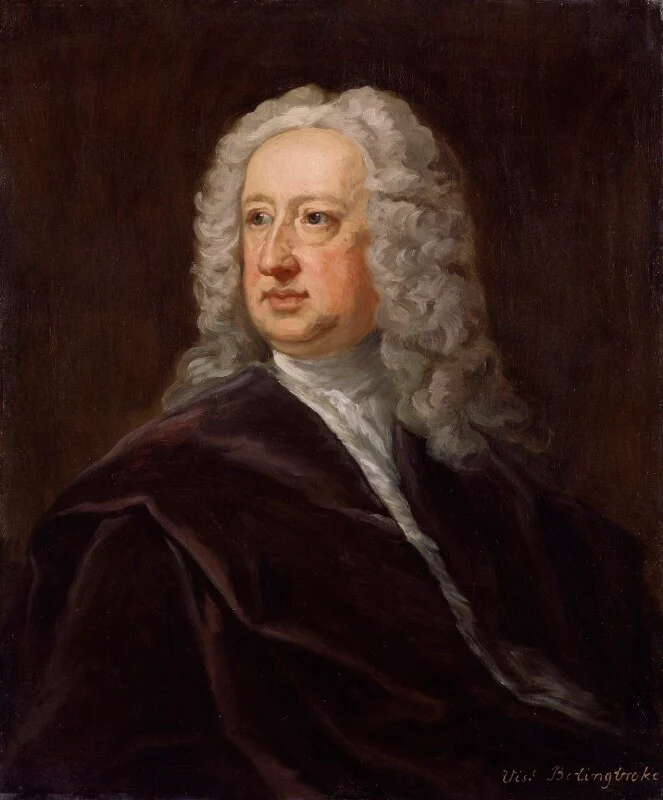
Yet Tory opposition ideology under George I and George II, otherwise known as ‘the Country party’, crafted an entire language and set of ideas that transmitted across the Atlantic and inspired the Founders. Chief among them was Lord Bolingbroke, a former Jacobite and deistic rake. An unlikely figure to become a symbol of American patriotism. Taking a closer look at Bolingbroke and the Tory writers around him can help give us a better understanding of what the Founders were trying to achieve. It also shows how the American and British political traditions can both be distinct from each other and deeply interconnected at the same time. It is a contradiction, but that is what makes American independence such a fascinating historical event and worthy of constant study.
Tory Rebels in Georgian England
The old Tory party was born steeped in royalist sentiment. Its original purpose was to defend the House of Stuart and the line of hereditary succession from interference by Parliament. Tories argued that the Whigs would threaten to return the country to the republican fervour and violence of Oliver Cromwell. It was the Whigs who represented the insurgent opposition, determined to place constitutional limits on the monarchy, expand religious toleration, and stop a Catholic from becoming king. By 1714, the tables had turned dramatically. It was the Whigs who were the defenders of monarchical authority under the Protestant House of Hanover, and it was the Tories who were expelled into the political wilderness.
Many Tories had failed to reconcile themselves ideologically with the Glorious Revolution and its consequences for the monarchy. They had to accept the fiction that the Catholic James II voluntarily vacated the throne rather than being forced to flee by a Dutch invasion force under William of Orange. They then had to come to terms with the House of Stuart being replaced by the House of Hanover in order to avoid a Catholic monarch. Some flirted with the Stuarts, otherwise known as Jacobites, in the hope of holding on to political office and keeping the Whigs out.
Lord Bolingbroke was among the most talented, intelligent, and morally degenerate leaders of the Tories during this period. He kept channels open with the exiled Stuart court under the Old Pretender, self-styled as James III, in the event of a successful Jacobite rising. When the last Stuart monarch, Queen Anne, died it was clear that the Hanoverian would claim the throne as they were entitled to do so under the Act of Settlement. Tories expected severe reprisals from the Whigs once they returned to office. Bolingbroke decided to leave England for France and became an advisor to the Old Pretender. It ruined his reputation permanently and ensured he would never hold public office again.
As a politician, Bolingbroke had been a voice for reactionary Tory views on religion, making the case for the privileges of the established church and curtailing the rights of dissenters. This, of course, runs contrary to the spirit of American independence with its emphasis on religious pluralism. However, the Tory party under William III and Anne had developed a different approach towards state power. It became more sceptical of crown authority given their lack of belief in the post-revolution legitimacy and the Whig grip on executive power. But the Tories also detested the constant thrum of warfare that began with William III and would dominate much of the eighteenth century.
Tories and dissident Whigs formed a ‘Country party’ under Sir Robert Harley and, later, Bolingbroke. They resented the huge land taxes levied to pay for the war. Not only did the revenue go towards a large standing army, still distrusted as a vehicle of oppression with the memory of the civil wars still in people’s minds, but also a sprawling state apparatus of officials. This in turn powered the growth of a significant financier class in London, strongly aligned with the Whigs, who benefitted from the deficit-financing needed to pay for prolonged warfare. Toryism developed a libertarian tinge that did not exist before the glorious revolution. The Bank of England, London Stock Exchange, and the National Debt became new and permanent parts of public life.
When George I came to the throne, the Tory party was proscribed from office for a generation and Harley along with other Tory leaders were thrown in the Tower of London. They were eventually released and exonerated unlike Bolingbroke. But it completed the transformation of the Tories into an entirely oppositionist force and cemented their hostility to the Hanoverian regime. In the years following proscription, the Tories were a large but ineffective force in Parliament. The Whigs rigged the system to their benefit by pouring money into elections, extending the parliamentary term from three years to seven years, and appointing MPs to lucrative offices or giving them generous pensions.
The regime stabilised under the leadership of Sir Robert Walpole, often referred to as Britain’s first prime minister, who used unprecedented executive corruption to dominate parliament and stamp out any challenges to the Hanoverian regime. It was in this context that Bolingbroke returned to Britain and helped lead the opposition to Walpole. In 1725, he set up The Craftsman with other Country party writers from Tory and Whig circles. Bolingbroke was supported by Tory satirists like Alexander Pope, Jonathan Swift, John Gay, and John Arbuthnot, in the fight for moral and constitutional virtue. The old Toryism of royal prerogative and divine right that had flourished under Charles II and James II was gone. But Bolingbroke was part of the new Toryism that emerged after the glorious revolution and would find a very different audience.
During this time, there was a shared use of Augustan literature to praise republican virtue by Tory satirists. This included heavy referencing of Cato, Cicero, and Tacitus as republican heroes against tyrants like Sulla and Caesar. These Tories believed George I had become a new Augustus. The corruption of Georgian England was compared to Nero’s Rome. Similar attacks had been used by Whig writers against the Stuarts but the debate has become inverted. David Hume commented on how the Tories had “embraced the sentiments as well as the language of their adversaries”. Classical republicanism was coming into intense pressure against modern liberalism, and Toryism had decided to back the former as its best chance of conserving what it valued about English society.
Bailyn argued that The Craftsman was a serious resource for American readers. He said, “Its savage, bitter, relentless attacks were indistinguishable from Cato’s polemics on major points of political criticism. The Craftsman, in fact, quoted the writings of Trenchard and Gordon freely, and otherwise, in almost identical language, decried the corruption of the age and warned of the dangers of incipient autocracy.” Bolingbroke’s work was also published in Boston and John Adams claimed to have read his Freeholder’s Political Catechism, published din 1733, five times. Protesters used arguments from The Craftsman in Massachusetts in 1754 to oppose an excise act just as had been the case in 1733.
Bolingbroke changed in another regard by formally abandoning his religious extremism and endorsing deism. This was a direct result of his exile. He departed from tory divine right but neither did he embrace contract theory. He was more prescriptive in his admiration for the landed interest and the constitution. This produced a philosophy more suited to the post-revolution political order in England but also broadened its appeal to American readers. By 1731, The Craftsman was selling 12,000 copies a week and was even being reprinted in New York. This literary reach did not translate into parliamentary success. The Whig elite continued to dominate, and Bolingbroke finally retired from the political arena in 1735.
But Bolingbroke kept writing, dedicating himself to the cause of patriotism rather than party interest. He defended the landed interest against the new Whig financiers who made their wealth from public debt, stock markets, banking, and corporations. The corruption of the moneyed interest would end the independence of parliament, unsettling the ancient constitution with its balance between the crown, lords, and commons. There was a brief moment when it seemed like his ideas might come into fruition. Prince Frederick, the estranged son of George II, gathered opposition Whigs and Tories together in 1737. The following year, Bolingbroke wrote The Idea of a Patriot King to urge the crown to expel corrupt ministers and officials from power. But the opposition remained too heavily divided and the whig elite too strong. When Prince Frederick died in 1751, it would be his son, the future George III, who became the new hope for a patriot revival.
This opposition culture, shaped in response to the specific circumstances of Walpolean England, was able to jump across the Atlantic because of a shared Anglo-American political and literary culture. The colonists believed they were freeborn Englishmen, fighting to defend their rights under English law and secured by English blood. But the unique social features of colonial America made its settlers more receptive to certain strands of political thought than others. Having no landed aristocracy or national religion meant that the more dissident strands of English thought found an audience, such as the Real Whigs, or Commonwealthmen as Caroline Robbins christened them. But they also benefitted from the dissident thought provided by the Tory intellectuals who did just as much to craft Country ideology.
Country Ideology in America
At the heart of the Country appeal to Americans was the problem of corruption and the defence of civic virtue. This included a suspicion of standing armies and favouring the formation of militia, and a disdain for patronage, established churches, the monied interest. J.G.A. Pocock, a profoundly influential historian of American political thought, said:
“The confrontation of “virtue” with “corruption” is seen to have been a vital problem in social and historical philosophy during that era, and its humanist and Machiavellian vocabulary is shown to have been the vehicle of a basically hostile perception of early modern capitalism, grounded in awareness of the elaborate conventions of public credit rather than of the more direct interchanges of the market.”
Corruption flowed from modern forces such as political factions and financial speculation. Walpole was the ultimate symbol of English modernity, earning the admiration of Alexander Hamilton and the enmity of Thomas Jefferson. He became such a potent symbol of corruption in England, which the American patriots hoped to escape. The glorious revolution was accepted but the financial revolution was not for much of the eighteenth century. Opposition writers believed in constitutional balance to prevent the power of the crown from overwhelming the lords and commons with corruption.
Flowing from this debate was the divide between Court and Country. In England, Pocock detected “a series of peaks” in this discourse between 1698-1702 involving the standing army controversy, 1711-1714 at the end of Anne’s reign, the South Sea crisis, and finally 1726-1734 period when Bolingbroke led the anti-Walpole campaign. As America had a relatively weak court presence, and no titled aristocracy, it was the Country tradition that dominated and shaped American discourse.
What brought English Toryism together with American patriotism was an attachment to the land. While Toryism combined this with a belief in hereditary right, they placed their faith more squarely in the squire and parson of rural life rather than the dukes and bishops who served the ruling Whig elite. This brought them more in line with the American patriots such as Adams and Jefferson who saw farmers as the rock on which civic virtue is built. The Tory appeal to the landed interest was consistent with its views of authority as well as the Country ideal that would help inspire the Jeffersonians and later generations of agrarians.
Just as they shared this common attachment to the land, there was a shared hostility to the moneyed interest that had thrived since the glorious revolution and supported the Whig elite. Bolingbroke appealed to the country gentlemen who prided themselves on their independence in the House of Commons. Both traditions were hostile to standing armies as potential threats to the constitution and preferred the use of militia and adopting a blue-water policy, seeing the navy as a force for freedom and commerce. Naval expansion was not free from the monied interest given the role of the national debt and public credit in financing shipbuilding. But it clearly influenced early American defence thinking.
Most significantly, Bolingbroke shaped the debate around the separation of powers and the true meaning of the English constitution. Bolingbroke looked at crown, lords, and commons as three branches of government representing the one, the few, and the many. This thinking can be traced back from Aristotle, Polybius, Machiavelli, and Harrington. There were limits to this conceptualisation when applied to the actual workings of the British Parliament, requiring each of these branches to influence each other. The rise of the monied interest was unbalancing the constitution in favour of the crown and threatened to corrupt the entire constitution.
In the American context, given the lack of a court or titled aristocracy, this would be reconfigured as the separation of powers between the executive, legislative, and judicial branches. But the logic was the same. There should be balance between the different branches to prevent one from becoming corrupt and overwhelming the others. The Founders departed from Bolingbroke’s constitutional in another important way. In 1733, Bolingbroke had defined the constitution as, “we mean, whenever we speak with propriety and exactness, that assemblage of laws, institutions and customs, derived from certain fixed principles of reason, directed to certain fixed objects of public good, that compose the general system, according to which the community hath agreed to be governed”. This prescriptive interpretation was not followed by the Founders who instead decided to codify the constitution.
The Country platform in England was different from the goals of the American patriots, but it had some similar policy goals. Bolingbroke and his Tory allies argued for more frequent elections, voting rights based more firmly on land ownership, and less patronage and speculation, lower taxes and an end to deficit spending, and far less war. These ideas and arguments bled into the discourse of the early American republic in new ways. As a self-described “modern Whig”, Hamilton believed it was inevitable that America would become a large, militaristic, and commercial country but that it could maintain republican virtue along the way. Hamilton’s vision of a national debt, national bank, and strong federal government sparked a Country-style backlash from Jefferson and the Republicans.
Country ideology, in both Tory and Whig form, was transformed into American agrarianism thanks to Jefferson. IN 1785, Jefferson remarked, “The mobs of great cities add just so much to the support of pure government, as sores do to the strength of the human body. It is the manners and spirit of a people which preserve a republic in vigour. A degeneracy in these is a canker which soon eats to the heart of its constitution.” By contrast, agrarian society would deliver virtuous citizens and equality of property. This could only be maintained by expanding the frontier, pursuing manifest destiny. Agrarian society in the South, with its slaveholding elite, sought to emulate English aristocracy and its notions of gentility. The influence of seventeenth century royalists emigrating to America after the execution of Charles I can be seen as a historical and romanticised influence on this attempt to overlook the brutal nature of how the Southern elite enjoyed its prosperity.
Although the United States Constitution departed in many important ways from the English constitution, and represented a break from classical politics, American discourse continued to be shaped by it. Modernity had not yet arrived like it had in England where Court and Country were seen as existing in creative tension. British victory in the Seven Years’ War was depicted as a moment like Rome’s transformation from a republic into an empire, proven by subsequent events such as the Stamp Act and the Boston Massacre. This made many Americans wary of a similar transition happening to their own country. It is this mentality of vigilance and paranoia of republican decline that has shaped American politics ever since.
Anglo-American Political Culture
Historians such as Caroline Robbins, Benard Bailyn, Gordon Wood, and J.G.A. Pocock have all convincingly argued that the political culture that developed in the American colonies was heavily influenced by English writers, including Tory scholars who came after Bolingbroke. The British constitution, they believed, was based on freedom, limited government, balance, social mobility, and republican virtue in contrast to the monarchies of Europe. Wood said, “The American colonists in the early 1760s thought of themselves not as Americans but as Britons. They were provincials living on the edges of a great pan-British world, and were all the more British for that. They were proud of being part of the British empire and of living under a free government, and they shared fully the enlightened eighteenth-century’s enthusiasm for the English constitution”.
This gave them a strong attachment to the English legal and political tradition, with special attention to the seventeenth century lawyers who defended the common law against the Stuarts. It was William Blackstone, a Tory legal scholar at Oxford University and future tutor to George III, who expressed this tradition most eloquently in his Commentaries on the Laws of England (1765-1769). Blackstone’s Commentaries reached 100 editions by 1900 in North America. He helped establish the law as an academic profession. It was a persuasive and inspiring articulation of the English constitution and its origins. Bailyn explained the appeal of the Commentaries, saying it “stemmed not so much from its particular exposition of English law…but from its great effort to extract general principles from the English common law and make of it… ‘a science’.”
However, this account arrived in the same year as the Stamp Act and made a number of claims about the English constitution that went against the interests and beliefs of the American patriots. Blackstone argued for the complete sovereignty of Parliament over the entire empire, and how representation was not direct and subject to the individual judgement of elected members. Ideas around sovereignty and representation, and the American interpretation of them, went to the heart of the revolution. This created a creative tension in which the English constitution was both admired and seen as a weapon used against them.
These debates were not settled by the revolution or even the constitution. Sovereignty was constantly contested. The clash between Westminster and the colonial assemblies transferred to the debate between Federalists and Antifederalists and then the Union and the Confederacy. It found echoes in debates around the New Deal. But the important shift in understanding sovereignty, which departed from English politics, was to place it with the people. This showed how the English and American traditions could share a common heritage but then depart from each radically following independence.
Another great Tory scholar who influenced early American literary and political culture was Dr Samuel Johnson. It was his famous A Dictionary of the English Language (1755) that helped standardise English and was seen as an immense achievement. It was read in the American colonies and George Washington and Thomas Jefferson owned copies. Benjamin Franklin, who benefitted from London’s literary circles, met Dr Johnson and found his dictionary useful. These are some of the greatest writers of American history and Johnson’s Dictionary was a vital resource. After all, the American Revolution was based on words as much as gunpowder. It was not until 1828 that Noah Webster would attempt a similar feat for America. It is just another splendid paradox that American rhetoric and prose should take advantage of someone who was so utterly opposed to the independence of the colonies.
The Revolution Today
In the 250 years since the declaration of independence, American society and politics has undergone a vast number of changes. From agrarian republic to commercial empire, slavery to civil rights, thirteen colonies to fifty states. The Founders would be shocked by what has grown from the seeds they planted. But there are important continuities that they would recognise and became embedded partly thanks to this Tory influence on their thinking and American politics. None more so than the conflict between corruption and virtue.
If we crudely translate the Court and Country divide into one between Hamiltonians and Jeffersonians, then we can see how American politics has been shaped by these eighteenth-century impulses. Just as the Court and Country divide cut across Whig and Tory lines, so the Hamiltonian and Jeffersonian divide cuts across left and right. Andrew Jackson, William Jennings Bryan, Huey Long, and Barry Goldwater can be seen as examples of the Jeffersonian backlash against modernity and concentrated power. Each in their own very different ways sought to defend republican virtue and agrarian or frontier society. By contrast, the Hamiltonian strain has been expressed by the likes of Henry Clay, Abraham Lincoln, Theodore Roosevelt, and Franklin D. Roosevelt.
Looking around modern America, one might fairly argue that it is the Hamiltonians who won. But this is to simplify two and a half centuries of American history and misunderstand the fundamental character of the nation. Jeffersonianism continues to make itself felt, even if the name of Jefferson is not as hallowed as it once was, through the populists of both left and right. The fear of concentrated financial wealth on Wall Street or in Silicon Valley continues to be heard from democratic socialists. Calls to “drain the swamp” and attacks against the media and the universities show the intense distrust of elites from the MAGA movement.
Just as eighteenth-century England eventually found a way to balance its Court and Country interests, America has done the same with its Hamiltonian and Jeffersonian strains. It is when these forces come into conflict that American politics become most fractious. Political coalitions of both have shaped decisive points in American history from the abolition of slavery, the progressive movement, the New Deal, and the conservative movement. The future of the United States at this moment in time is uncertain. President Trump has promised a new “golden age of America”. His critics see something much more ominous. What is certain is that the status quo is giving way to something new, a realignment of parties and a reordering of politics. Whatever does emerge will be following the footsteps of their American and English ancestors.
About The Author
