







Prosperity rests not on intentions, but on foundations. In Germany’s case, those foundations were historically not only institutional and industrial, but energetic: the stable supply of power that made production, exports, and growth possible. Otto von Bismarck and Konrad Adenauer represent very different German traditions—one rooted in the iron-and-blood Realpolitik of the 1870s and the other in the international cooperation of the 1950s. Yet both understood a truth modern Germany has forgotten: economic strength rests on energy stability. For Bismarck, that meant industry, steel, and state capacity; for Adenauer, it meant embedding those same foundations within a European order capable of securing peace, prosperity, and cooperation. Neither man confused moral aspiration with economic reality.
That postwar desire for cooperation found its clearest institutional form in the European Coal and Steel Community. For West Germany, the ECSC was not merely a peace project or diplomatic innovation. It was also an acknowledgment that Europe’s recovery depended on reliable access to the industrial inputs that had long underpinned power and growth. Coal and steel, once the material instruments of destruction, became the foundations of reconstruction. In the reverse of Frédéric Bastiat’s maxim, goods crossed borders so that soldiers did not—and West Germany’s recovery was built on that base.
The oil shocks of the 1970s reinforced this lesson in a new way. As the Organization of the Petroleum Exporting Countries, or OPEC, flexed its geopolitical power through supply disruption, West Germany was forced to confront how vulnerable even a sophisticated industrial economy could become when its energy lifeline lay abroad. The shock was so severe that even Autobahn speeds were temporarily capped in the name of fuel conservation. In response, West Germany accelerated its nuclear buildout. What had begun with the first reactor at Kahl in 1958 became a major strategic program in the 1970s, when nuclear plants were launched at a far faster pace, with the International Atomic Energy Agency, or IAEA, reporting an average of three nuclear units ordered annually between 1970 and 1975. Nuclear energy was not pursued simply as a modern technology, but as a strategic hedge: a means of securing stable electricity, reducing dependence on foreign energy producers, and protecting the industrial base on which German prosperity depended.
By the 1980s, the postwar Wirtschaftswunder had matured into enduring industrial power. Ronald Reagan captured that achievement in Berlin in 1987 when he declared, “In West Germany and here in Berlin, there took place an economic miracle, the Wirtschaftswunder.” West Germany averaged real GDP growth of 8.2 percent in the 1950s, 4.4 percent in the 1960s, and 2.9 percent in the 1970s, while exports of goods and services averaged 28 percent of GNP by 1980. No sector captured that success more vividly than automobiles. Volkswagen, Mercedes-Benz, and BMW were not merely selling cars; they were exporting engineering, reliability, and the industrial prestige of a nation that had rebuilt itself from ruin.
The Wirtschaftswunder was not merely a recovery from ruin; it was the construction of an industrial order powered by energy stability. Reunified Germany rose on that foundation to become the economic heart and motor of Europe, with a manufacturing base and export machine that gave it extraordinary weight across the continent. That was the Germany the world admired: productive, disciplined, export-driven, and anchored by the material foundations of industrial strength. Just 36 years after reunification, however, Germany’s industrial prowess risks becoming a fairy tale from the Brothers Grimm rather than a model for Europe.
If the oil shocks of the 1970s accelerated West Germany’s turn toward nuclear energy, Fukushima Daiichi in 2011 reversed that logic. A nuclear disaster in Japan, grave enough to force mass evacuation, turned Germany’s own nuclear fleet from a pillar of industrial stability into a political liability, even though German reactors had provided decades of reliable power. At the start of 2011, 17 reactors supplied more than one-quarter of German electricity and formed a crucial part of the country’s stable industrial base. Yet Berlin responded by accelerating the phaseout, shutting eight reactors in 2011 and binding itself to the dismantling of a system that had underwritten German industry for decades. Germany did not simply move away from nuclear energy; it dismantled part of the infrastructure that had made its industrial prosperity possible.
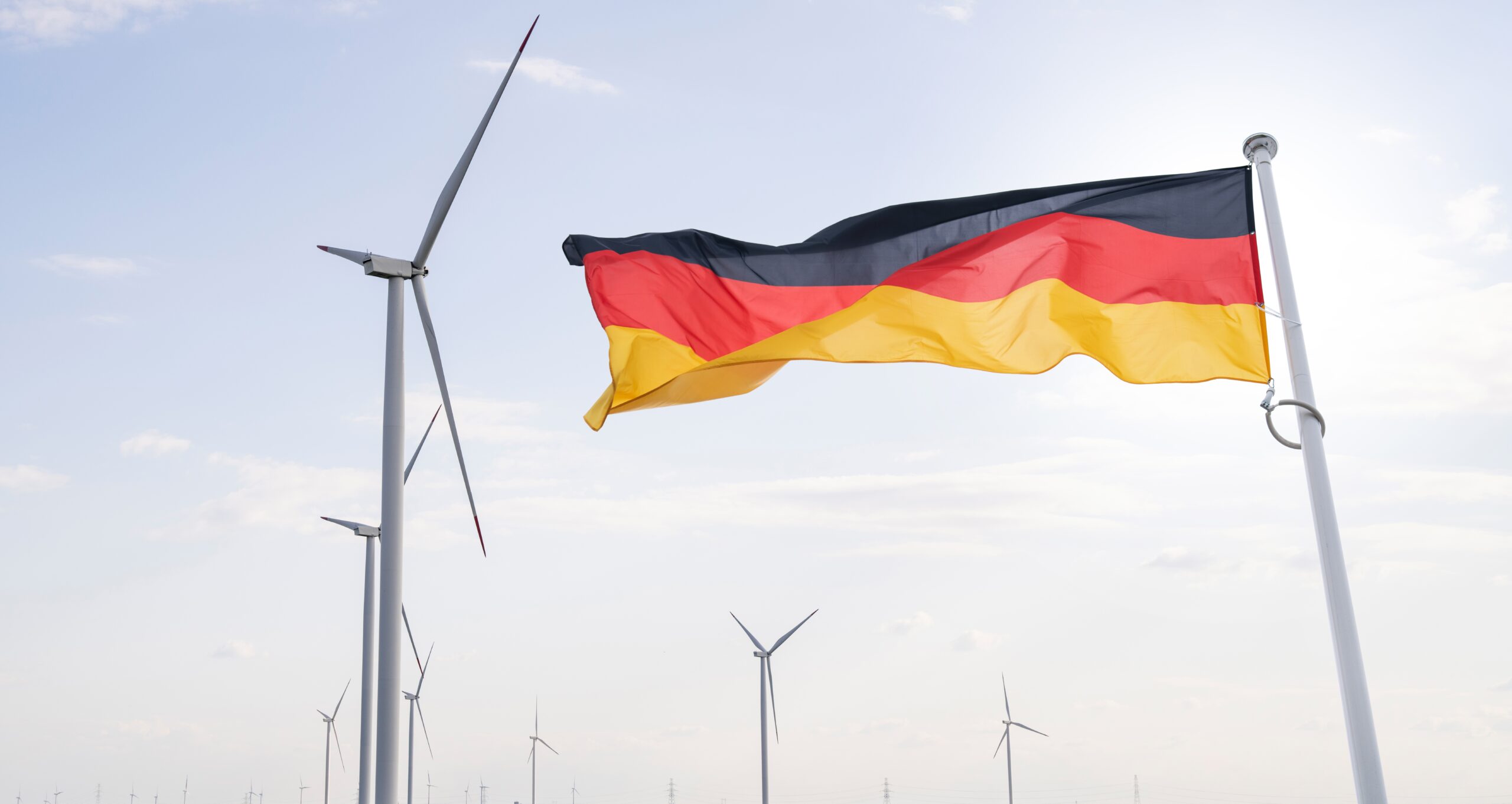
Indeed, this was part of a larger German project known as the Energiewende, a sweeping effort to move the country away from both fossil fuels and nuclear power and toward a system built on renewable energy sources. In 2024, wind was the single largest source of German electricity generation at 27 percent of gross power production, and renewables overall accounted for about 54 percent, or roughly 285 terawatt-hours. Yet these gains did not solve the deeper problems of cost, reliability, and competitiveness. The International Energy Agency’s 2025 review exposes the fragility of Germany’s model: natural gas still accounts for roughly a third of final energy consumption, transport remains “a clear sectoral laggard” from an emissions perspective, and industry faces “growing threats to competitiveness” in part because of high natural gas costs. Germany, in other words, expanded renewable generation without reproducing the stability, affordability, and strategic resilience that its older energy order had once supplied.
The logic of the Energiewende extended beyond power generation to transport, where electric vehicles became the automotive expression of a broader push to replace fossil fuels with an electrified economy. Berlin did not leave that shift to market forces. Germany’s environmental bonus offered €4,000 for battery-electric cars and €3,000 for plug-in hybrids, with support later rising as high as €9,000 for some lower-priced EVs before ending in December 2023. The following year, the IEA reported that electric-car sales in the European Union fell by 6 percent, largely because German subsidies had been removed. The pressure is now visible in the industry itself: Volkswagen planned at least three factory closures in Germany, major layoffs, and a 10 percent wage cut, underscoring how far the country’s flagship manufacturer has moved from expansion to retrenchment.
But the troubles of German automobiles were only the most visible symptom of a deeper national failure. Berlin had wagered that it could phase out nuclear power, expand renewables, and use Russian gas as a bridge, with Nord Stream as the symbol of that strategy. Yet when war returned to Europe in 2022, the energy model collapsed. Russian gas flows were severely disrupted, Nord Stream was damaged by explosions, and Germany lost another major source of energy security. Even then, Berlin pressed ahead with the closure of its final three nuclear reactors—Isar 2, Emsland, and Neckarwestheim 2—on April 15, 2023, while authorizing the temporary return of coal-fired plants to secure electricity supply. In abandoning nuclear power even after another pillar of its energy system had failed, Germany revealed not strategic flexibility but ideological rigidity. The costs fell hardest on the industrial sectors—primarily automobiles—that depended on reliable and affordable electricity. Under such conditions, even emerging energy-intensive sectors such as AI and data centers will struggle to take root. From a climate perspective, the irony was complete: coal-fired plants were revived to substitute for cleaner nuclear energy. Whether it is already too late remains the open question. Germany can still lower energy costs and rebuild industrial resilience, but every year of drift makes recovery harder.
The wider European picture only deepened the contradiction. In March 2026, the European Commission launched a strategy for small modular reactors, presenting nuclear as a tool of competitiveness, energy security, and climate neutrality. After years in which nuclear had been politically marginalized, Brussels itself began to return to it, with Commission President Ursula von der Leyen saying, “Europe made a strategic mistake by moving away from a reliable and affordable source of low-emission energy.” The reversal exposed not strategic clarity, but the incoherence of top-down decarbonization.
The current Iran war underscores how exposed Germany remains. As diesel prices rose from €1.75 to over €2 per liter, Berlin announced a €1.6 billion relief package that included a temporary 17-cent cut in fuel taxes. At the same time, the ifo Institute warned that German GDP growth in 2026 could fall to just 0.6 percent under an escalation scenario driven by higher oil and gas prices. If this becomes a turning point away from the Energiewende, it will be because the fallout from Germany’s anti-nuclear turn has laid bare its failure to achieve energy independence.
That external vulnerability is mirrored by an internal one: a political culture increasingly inclined to moralize energy questions rather than confront their industrial tradeoffs. Groups such as Last Generation blocked roads and disrupted airports in the name of decarbonization, while Greenpeace pursued legal campaigns against firms such as Volkswagen and helped sustain a broader climate in which industrial production itself is morally suspect. Other activists staged theatrical protests at symbolic automotive sites, including the 2022 sit-in at Volkswagen’s Autostadt, where demonstrators glued themselves to the floor of a Porsche pavilion. These actions did not cause Germany’s decline, but they reinforced a public atmosphere in which energy stability, industrial tradeoffs, and economic realism could be dismissed as moral compromise. Germany’s slide from Wirtschaftswunder to the new sick man of Europe was driven not only by bad policy, but by an ideology that treated disruption as virtue and realism as surrender.
Bismarck understood that power rested on material strength. Adenauer understood that peace and prosperity required securing that strength through institutions. Modern Germany has forgotten both lessons. In sacrificing energy realism to political symbolism, it weakened the industrial foundations of its own success. A country once built on coal, steel, and nuclear power did not become Europe’s sick man by fate. Even the land der Dichter und Denker can decline when it chooses moral theater over material strength.
About The Author
