





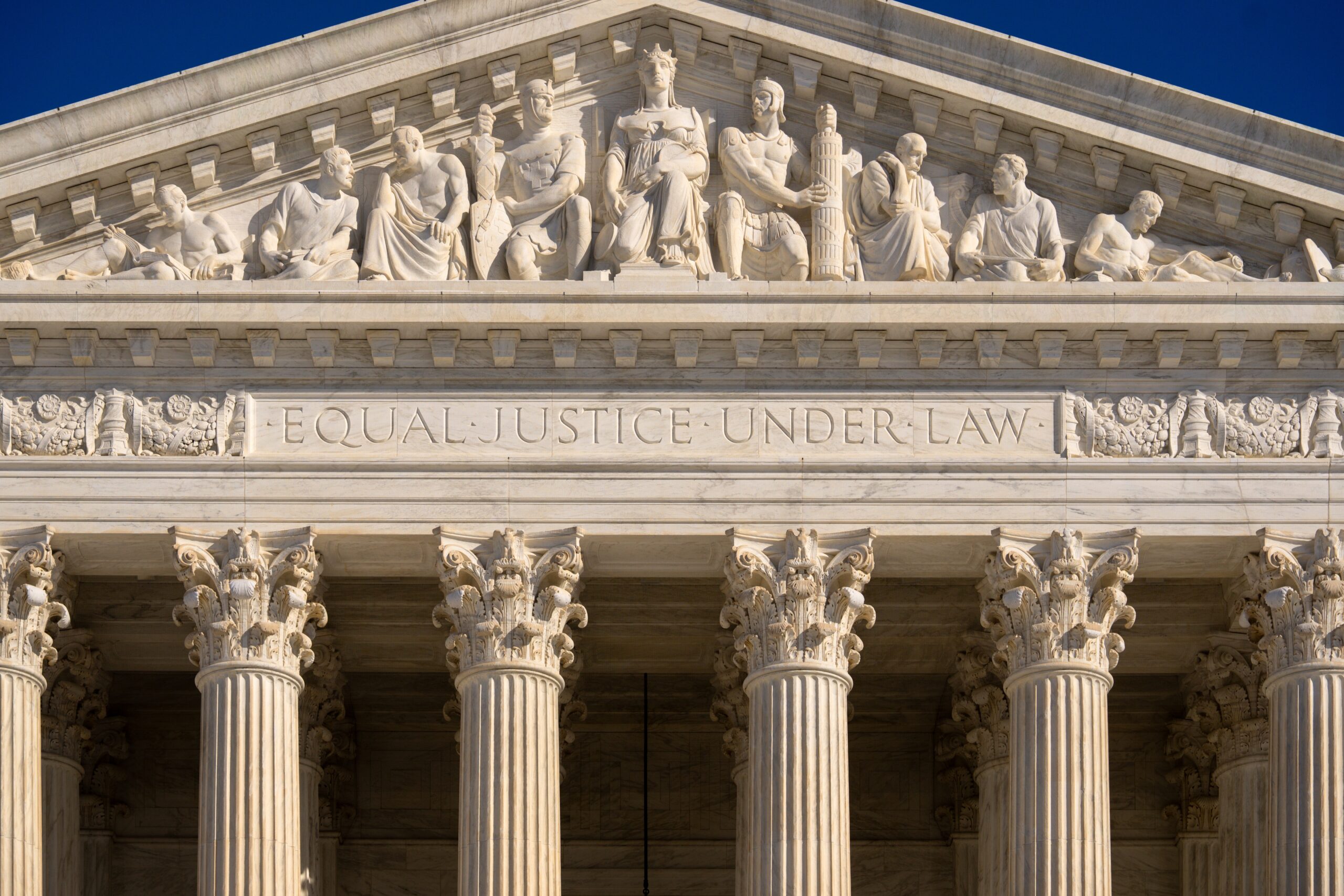


This past month, in Chiles v. Salazar, the Supreme Court overturned a Colorado ban on “conversion therapy” in an 8-1 decision. The case was ostensibly a victory for legal conservatives and free speech, as only the fatuous Justice Jackson dissented from the majority’s decision. Conservatives, however, should be cautious in praising the majority opinion of Justice Neil Gorsuch, the basis of which is to be found not in traditional American conservative thought but liberalism.
Gorsuch writes that “They may believe that state-imposed orthodoxies in speech pose few dangers and many benefits in this field (and who knows what others). But their policy is not the First Amendment’s. The Constitution does not protect the right of some to speak freely; it protects the right of all. It safeguards not only popular ideas; it secures, even and especially, the right to voice dissenting views.”
The immediate effects of the decision are salutary in overturning an unjust and immoral law, but most legal conservatives today blanch at any emphasis on the morality of various regulations. Instead, they tend to emphasize a liberal framework that prizes process and neutrality. Under this framework, the common praise for Chiles v. Salazar is that it applies equality and has nothing to do with the righteousness of a particular law—that is, whether that law in fact satisfies the common good.
Gorsuch’s concluding words crystallize his underlying commitment to this essential liberal vision of the purpose of free speech. As he puts it:
“In cases like this, it censors speech based on viewpoint. Colorado may regard its policy as essential to public health and safety. Certainly, censorious governments throughout history have believed the same. But the First Amendment stands as a shield against any effort to enforce orthodoxy in thought or speech in this country. It reflects instead a judgment that every American possesses an inalienable right to think and speak freely, and a faith in the free marketplace of ideas as the best means for discovering truth.”
Quoting the opinion of Chief Justice Rehnquist in Rosenberger v. Regents, Gorsuch maintains that any law, regardless of the moral good of its intentions, which “suppresses speech based on viewpoint represents an ‘egregious’ assault on both of those commitments.” There is much worth considering and breaking down within Gorsuch’s presumptions and his capacious understanding of free speech.
The notion that viewpoint discrimination is prohibited under the First Amendment is very difficult to surpass and, whatever its questionable historical and constitutional basis, carries a very strong consensus in First Amendment doctrine. If not for the incorporation of most of the Bill of Rights, itself a fraught proposition under a historically sound reading of the Fourteenth Amendment, state police powers—the sovereignty to regulate for “public health and safety” to which Gorsuch refers—might still give states significantly greater regulatory capacity to censor certain viewpoints considered dangerous to public order.
More importantly, twin ideas—that America’s founding principles include a complete rejection of censorship as ever just and lawful, and that there can be no enforceable orthodoxy in thought or speech under the First Amendment—are rather sophistic, both in their implications and in their underlying ontology. This interpretation reads into the First Amendment the ideas of John Stuart Mill and the liberal open society, something that scholars like Leonard Levy and David Lowenthal, in his No Liberty For License, showed to be utterly implausible readings of the Founding-era meaning and tradition of “free speech.” Not only did the liberal turn towards Mill’s absolute theory of freedom of expression over half a century after the First Amendment was written, but even the Founders most oriented towards classical liberalism, like Thomas Jefferson and James Madison, did not maintain such a wide and unbounded idea of protected speech.
Madison, for instance, in his draft of the Bill of Rights presented to Congress in June 1789, reflects the limitations on what constituted “free speech” in the traditional understanding. Madison’s original proposed text stated that the people “shall not be deprived or abridged of their right to speak, or to write, or to publish their sentiments; and the freedom of the press, as one of the great bulwarks of liberty, shall be inviolable.” Madison, to be clear, saw free speech as absolutely essential to the success and maintenance of the American constitutional system, but this was because it was a tool to elucidate the “deliberate sense of the community” and “public opinion” necessary for republicanism and representation.
Jefferson, along with Madison, is often remembered by free speech warriors for his protest against the 1798 Alien and Sedition Acts in the Kentucky Resolutions. In those resolutions, Jefferson suggested a form of state interposition to halt the enforcement of what he believed was an unconstitutional act. When Jefferson won the presidency in 1801, he immediately saw to pardoning the dozens of Jeffersonian printers imprisoned under the Sedition Act. Yet, Jefferson did not suspend any prosecutions of seditious libel—his position was merely that the national government had no right to prosecute such offenses. His administration carried out numerous state law seditious libel prosecutions.
James Wilson, among the most notable framers of the American constitutional system, took up the question of whether the national government could curtail the liberty of the press during the Pennsylvania Ratifying Convention in December of 1787. Wilson denied that the government had any such power to destroy the liberty of the press, but noted that the law could punish libels and that no concept of freedom of speech was absolute:
“The idea of the liberty of the press is not carried so far as this in any country. What is meant by the liberty of the press is, that there should be no antecedent restraint upon it; but that every author is responsible when he attacks the security or welfare of the government, or the safety, character, and property of the individual.”
As Levy puts it, Wilson, the “most influential Framer of the United States Constitution” outside Madison, restated the English or Blackstonian definition of the freedom of the press. Wilson left “no doubt that he believed the law of seditious libel to be in force, because he spoke of the legal responsibility of writers who attacked the security or welfare of the government and he added that for such attacks the remedy was prosecution.” In his classic work on the founding meaning of the First Amendment, The Legacy of Suppression, Levy sums up the reality of the Founding period:
“What is clear is that no evidence suggests an understanding that a constitutional guarantee of free speech or press meant the impossibility of future prosecutions of seditious utterances. The traditional libertarian interpretation of the original meaning of the First Amendment is surely subject to the Scottish verdict: not proven. Freedom of speech and press, as the evidence demonstrates, was not understood to include a right to broadcast sedition by words. The security of the state against libelous advocacy or attack outweighed any social interest in open expression, at least through the period of the adoption of the First Amendment. The thought and experience of a lifetime, indeed the taught traditions of law and politics extending back many generations, supplied an a priori belief that freedom of political discourse, however broadly conceived, stopped short of seditious libel.”
Conservatives of the period took notice. Hadley Arkes, writing in the pages of National Review in 1978 on the Skokie case, wrote that while the Founders rejected the conventions of “prior restraint” on publication, they were “uniform in their denunciation of a ‘licentious’ press, and they assumed that the laws of defamation (both civil and criminal) would function as a form of redress against the juries that were inflicted through speech.” That is, the Founders understood free speech as a tool of a republican regime based in public discourse and conflict, but with a first obligation to render justice. As Levy shows, the English libertarians of the 17th century, from Milton to Locke, believed a free press “meant merely the absence of prior restraints” and the American framers, with few exceptions, inherited from them “in unaltered form an unbridled passion for a bridled liberty of speech.” NR’s editors in 1977 pointed to Levy’s work as showing that the “intentions of the Framers are limned with shocking clarity” as to the proposition that obscenity, like incitement to riot, was traditionally illegal and that communities retain the right to act in certain circumstances against individual rights.
Levy, to be certain, suggests that something like the Sedition Act may have been unconstitutional and he is skeptical of the utility of the debates over it to understand the original meaning of the First Amendment. However, he also concedes both that all Supreme Court justices who considered the constitutionality of the act between 1798 and 1800 upheld it and that the Federalist testimony of John Adams, William Paterson, and Oliver Ellsworth and others “whose opinions on our fundamental law and intentions of the Framers can hardly be dismissed.” Thus, conservatives today should consider the legitimacy of the Federalist position, as well as the view held by numerous Philadelphia Convention delegates and members of the Congress that drafted the Bill of Rights, that the Sedition Act was clearly a legitimate exercise of federal power. As Harrison Gray Otis, a leading Federalist supporter of the act, put it in the 1798 congressional debate, “it must be allowed that every independent government has a right to preserve and defend itself against injuries and outrages which endanger its existence.” Otis believed that Blackstone’s definition of the freedom of the press—as freedom from prior restraint, but not from prosecution for libel—had always prevailed in the American tradition. Two decades later, when the question arose of indemnifying Matthew Lyon, who was arrested under the Sedition Act, Otis took the senate floor to reiterate that all governments “must possess an inherent right to punish all acts, which being morally wrong, tend directly to endanger their existence or safety” as conveyed under Article I’s “necessary and proper.” Justice Joseph Story wrote to Otis to give support for the manner and matter of Otis’ speech and to share that he had by “reflection, by legal analogy, & by calm deliberation” come to share Otis’ view.
Gorsuch’s First Amendment jurisprudence shows little concern or appreciation for this history and scholarship. He has, in accepting the “Open Society” view, rejected the idea Otis—and later, Abraham Lincoln during the Civil War—maintained as to the defense of the public order. Notably, in his 2023 majority opinion in 303 Creative LLC v. Elenis, Gorsuch made clear that his views on the purpose and meaning of the First Amendment are squarely in line with the liberalism of Justices Louis Brandeis and Robert Jackson. He quotes at length from both West Virginia v. Barnette and Brandeis’ concurrence in Whitney v. California—classic illustrations of the liberal view that the First Amendment allows for no orthodoxy in thought or belief and that it commits us to robust public debate, à la Justice Oliver Wendell Holmes’ “marketplace of ideas.” As Gorsuch put it in the conclusion of his 303 Creative opinion:
“Eighty years ago in Barnette, this Court affirmed that ‘no official, high or petty, can prescribe what shall be orthodox in politics, nationalism, religion, or other matters of opinion.’ The Court did so despite the fact that the speech rights it defended were deeply unpopular; at the time, the world was at war and many thought respect for the flag and the pledge ‘essential for the welfare of the state. Fifty years ago, this Court protected the right of Nazis to march through a town home to many Holocaust survivors and along the way espouse ideas antithetical to those for which this Nation stands (citing the Skokie case from 1977)… But tolerance, not coercion, is our Nation’s answer. The First Amendment envisions the United States as a rich and complex place where all persons are free to think and speak as they wish, not as the government demands.”
Much is worth being weighed in Gorsuch’s analysis. Once more, as he does in the Chiles decision, he invokes the fundamentally liberal idea that there can be no orthodoxy in public life—and certainly none enforceable by government action. It is an essentially negative view of the state and liberty—quintessentially Jeffersonian rather than Hamiltonian. Gorsuch, in this classic tautology, sidesteps the real underlying question by merely invoking a staid principle: there can be no orthodoxy because for there to be such an orthodoxy, the government would necessarily have a role in enforcing it. In contrast, if one understands the public orthodoxy as Willmoore Kendall did in his classic work, The Conservative Affirmation, and his earlier essay, “The Open Society and Its Fallacies,” then the point is not that officials “prescribe what shall be orthodoxy,” but that, as representatives with a duty to preserve the existing order, they enforce the existing public orthodoxy already embodied in their constituents.
This leads to a secondary point that Gorsuch makes in 303 Creative: that the First Amendment and constitutional order are so committed to liberal tolerance that we are obligated to tolerate ideas “antithetical to those for which this Nation stands.” As noted in a previous essay on McCarthyism, Kendall, like many more traditional conservatives of his time (including Russell Kirk) rejected the liberal framework which demanded that, as a historical and normative matter, America was committed to being an open society. He believed Mill’s “Essay on Liberty” to be a “piece of bad political philosophy” which had sadly led most American intellectuals to conclude “freedom of speech” was a general principle applicable to all communities. Instead, Kendall argued, America was, like other nations, “founded upon what political philosophers call a consensus; that is, a hard core of shared beliefs…conceived of as a body of truths actually held by the people whose consensus it is, [which] is incomprehensible save as we understand it to exclude ideas and opinions contrary to itself.”
As Kendall explained in his 1957 National Review of Walter Bern’s Freedom, Virtue and the First Amendment, while the First Amendment appears to forbid “any and every abridgement by Congress of certain rights,” it is also “part of a Constitution, the purpose of which is to vouchsafe to the American people certain goods—justice, for example—that are set forth in its Preamble.” In a later NR 1959 essay on the question of “Do We Want an Open Society?,” Kendall added that the interpretation of the First Amendment which holds that “every American enjoys a right to think and advocate what he pleased” and that the Constitution forbids any enforceable political orthodoxy because it was “incompatible with the very idea of a free society” forgets that the Constitution above all was a “scheme for conducting government.” The text of the First Amendment says nothing about freedom of thought, and was long understood to allow Congress to restrain the speech of individuals in the interests of the “wider purposes of government.” With this understanding, a free society, as opposed to an “open society,” cannot “tolerate open challenge of the orthodoxy appropriate to it.” Justice Gorsuch misses the force of Kendall’s midcentury conservative critique: that the Supreme Court, with its absolutist reading of the Constitution as a mandate for an “Open Society,” makes it impossible for American legislators to defend the free and moral order.
Gorsuch’s idea goes to a common misapprehension among too many on the Right today that the conservative commitment to free speech entails an opposition to all “censorship” and “thought control.” In one of his best essays for National Review in 1978, Joe Sobran reminded readers that “censorship is a thing of bad repute among us” because liberal ideology and rhetoric” includes the proposition that there “should be no taboos or censorship” but “free expression à outrance.” The problem with that principle, as Sobran put it, is that it is “unrealistic, and its universalism is perforce specious,” since ideas need more than “mere arguments, more even than habit” to become established. That is, they require sanctions, including censorship, supported by a consensus in morals and manners.
Gorsuch’s innovation of the Skokie case, particularly in a conversation attaching itself to the tradition of National Review conservatism, is that William F. Buckley Jr. and his editors fervently opposed the ACLU’s defense of the Nazis on Skokie. The Illinois Supreme Court’s ruling to allow for the march on Hitler’s birthday in a largely Jewish suburb of Holocaust survivors was based in its refusal to invoke the “fighting words” doctrine, and its idea that the display of the Swastikas, “as offensive to the principles of a free nation” as it might be, was still “symbolic political speech intended to convey to the public the beliefs of those who display it.” Judge Bernard Decker, sweeping aside any restrictions on the march after his initial injunction against the Nazi marchers was struck down by the Supreme Court in 1977, likewise bemoaned the dangers of “permitting the government to decide what its citizens may say and hear.” The editors acerbically noted that the whole notion of “symbolic speech” was problematic—covering “speech acts,” “performative utterances” and similar modes of action with no basis in the original meaning of the Constitution. NR noted that not only were there important longstanding categorical exemptions to the protections of the First Amendment—false advertising, libel, threats, incitement to riot, “crank calls”—but that a “rigidly abstract and doctrinaire approach to free speech” was not the genuinely conservative understanding of the question the Skokie case raised.
Gorsuch’s recent interviews in both National Review and Reason Magazine also highlight the degree to which his characterization of the American founding and its essential meaning follow a longtime mainstream liberal set of views as to the purposes of speech and liberty. In his NR interview with Dan McLaughlin, Gorsuch suggests that the Declaration’s relationship to the Constitution is as a “mission statement” which lays out the ideas for us to “progress towards” over time. Beyond such a highly Whiggish understanding of history, Gorsuch elaborates on the meaning of democracy itself:
“I mean, you know, democracy is a rough and tumble business. It is. I’m not here to tell you it isn’t, but it’s magical, and it’s through those debates and disagreements that we are—that’s actually our strength if we can harness it. Because the fact that we all can speak our minds freely—and we can have a contest of ideas—means the best things emerge and because we have to compromise with one another and listen to one another, we find ways to mediate our differences so we can live together that, you know, that’s why we’re much more robust and resilient than a monarchy or you know, a despotism which is so much more brittle.”
Reading such an articulation of the nature of democracy and speech, one can hardly mistake its Holmesian and Brandeisian language. For conservatives to seek a reestablishment and reinvigoration of the traditional view of the First Amendment will require both a rejection of Gorsuch’s rhetoric and a deeper appreciation of why his views are essentially a derailment towards “open society” liberalism. As a corollary, it requires understanding just how much the Supreme Court has erred in over the past century in its construction of First Amendment doctrine. This is, to be certain, a monumental task. Yet, its possibilities will be rendered more probable the more the public and its representatives come to understand the errors of history and interpretation made by eminent leaders such as Justice Gorsuch.
About The Author
