





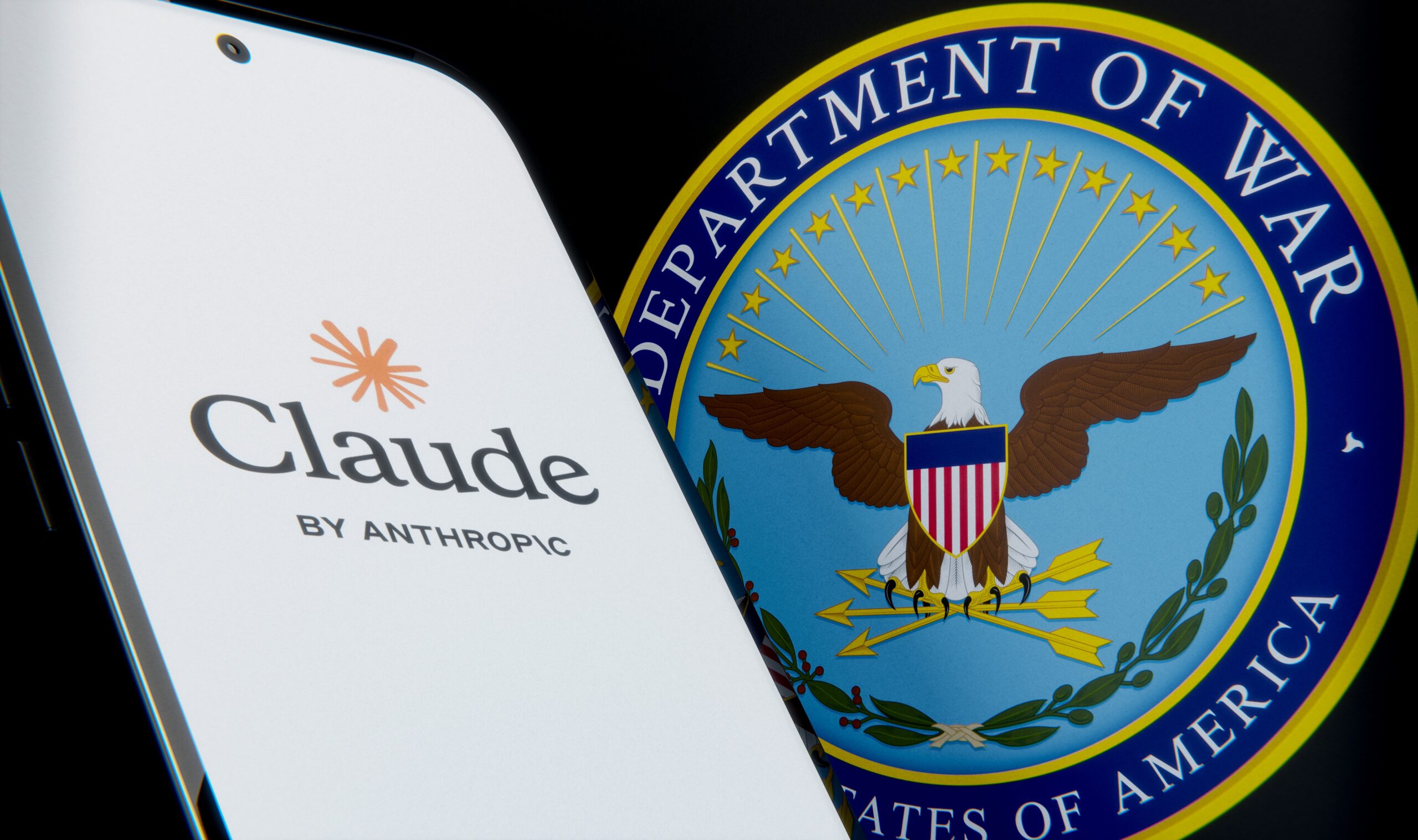


In late February, the Trump administration announced that it would abandon the use of Anthropic’s artificial intelligence tools and ordered all federal agencies to do the same. A few days later, the Department of War went further and officially designated Anthropic a “supply chain risk”. If this decision is upheld, it will prevent defense contractors—including cloud providers crucial to Anthropic’s business, such as Amazon Web Services—from using Anthropic for anything touching defense work. The dispute arises from the AI company’s insistence that its products not be used for fully autonomous weapons that operate without human oversight or for mass domestic surveillance of U.S. citizens. Anthropic’s stand reminds us of the essential moral responsibility of business in our democratic capitalist society. As corporations and governments design and adopt extremely powerful AI tools, the moral responsibility of business only grows more essential.
In a public blog post responding to the Pentagon’s demands that Anthropic permit the military to use its AI products without the safeguards it had previously sought, Anthropic CEO Dario Amodei stated: “We cannot, in good conscience, accede to their request.” Amodei’s invocation of conscience from the business realm is a refreshing and needed moral witness for our culture that is so obsessed with politics and rhetoric. This explicitly deeper, moral stance reminds us that the moral law to which conscience is bound applies not only to those who pursue explicitly humanitarian goals in their work, or to people who work for the government, but to everyone. Business is no exception, although this is something we seem to have forgotten. In his 1996 book, Business as a Calling, Michael Novak, the greatest theorist of moral business, describes a career in business as “not only a morally serious vocation but a morally noble one.” He paints a picture of business as a profession defined by the obligation to do what is good, even when it becomes costly. The virtues required for truly good business are many and cannot simply be reduced to cleverness in service of efficiency and profit, which, while good things, must be ordered to the deeper, moral virtue of practical wisdom.
Anthropic’s leadership, more than any other AI company’s, has exhibited this virtue, and has appealed to it in its design of AI products. This tracks well with its founding, which came about explicitly due to the founders’ concerns about AI safety. Originally, its co-founders left OpenAI, the creators of ChatGPT, because of the latter’s lackluster approach to safety. As a result, Anthropic incorporated as a public benefit corporation, a form of organization which permits the board to prioritize a mission of AI safety over pure profit maximization.
The standoff with the Pentagon, then, turned out to be the ultimate test of Anthropic’s commitment to moral ideals as a business. Its decision to forgo a lucrative defense contract cost it financially and, more crucially, incinerated its relationship with the Trump administration—which has proceeded to do as much damage as possible to Anthropic’s business. Being deemed a “supply chain risk” by the military may lead some of Anthropic’s largest enterprise partners to abandon it, posing an existential risk for the company. This high price to pay, however, is to be expected of a moral business. As Michael Novak writes in Business as a Calling: “high moral standards incur costs; some contracts may well be lost. As in other walks of life, moral fidelity is never cost-free.”
What is remarkable about Anthropic is not only its admirable commitment to moral obligation, but that its products are currently nothing short of the best in the world, a fact evidenced by the military’s continued use of them in its unjust war against Iran. Not only that, but its exhibition of moral strength has vastly improved its reputation in the commercial market, reaching number one on the App Store soon after its ban by the Pentagon. Anthropic was among the fastest growing businesses in world history before the Pentagon situation came to a head, and now it looks like that rate will only grow faster, at least on the consumer side.
In Business as a Calling, Novak discussed reputational boons among consumers as a positive consequence of being a moral business: “Yet far from being an impediment to success in business, moral conduct is in the long run more in keeping with probabilities of success than is immoral behavior.” He continues later: “There is no dollar worth making that requires the besmirching of a firm’s hard-won moral reputation.” A reputation of moral integrity does often serve a business well. Think about how companies like Patagonia have built their brand on moral causes, leading to their commercial flourishing. Despite this, it seems like it has been quite a while since we’ve seen a large corporation make such a strong moral showing. Public opinion polls reflect this intuition: America has simply lost trust in its business leaders. In 2022, a Gallup poll noted that only 19 percent of Republicans and 13 percent of Democrats had “a great deal” or “quite a lot” of confidence in big business. By 2025, another Gallup poll found that business executives are some of America’s least trusted professionals. Young people in particular are deeply distrustful of business, turning more toward political and economic views that are harsh and even violent toward corporate executives.
What makes the latter point so alarming is that America, as an enterprising nation, has a deep-rooted cultural respect for the moral role of businesspeople. This respect is embedded into our national DNA. The fact that we feel betrayed by corporations is not typical for us, but our current distrust is also not entirely without merit. A decade of failures, from data scandals to performative activism, has left Americans distrustful of the morality of their corporate executives. But a thriving sector of moral businesses, not just regulation, is needed in society. Businesses eschewing their moral responsibilities undermine an essential function that they serve in democracies.
Novak, writing in The Spirit of Democratic Capitalism, says this function has been present since the founding of our political economic order. Theorists such as Montesquieu, James Madison, and Adam Smith conceptualized business’s moral role as having a power-checking effect in the free society: “[The founders of democratic capitalism] wished to build a center of power to rival the power of the state. They separated the economy from the state not only to unleash the power of individual imagination and initiative but also to limit the state from within and to check it from without.” Economic enterprises, in other words, are meant to serve as an effective counterweight to the ever-present threat of tyrannical government. Fulfilling this role, however, requires those running these enterprises to be morally upright actors that are willing to let their businesses take political and commercial hits for the sake of what’s right. Tech executives, despite being in the most morally important industry in the world, have not taken any particularly noble actions in recent years. At a White House Dinner last year, CEOs Tim Cook of Apple, Mark Zuckerberg of Meta, and Sam Altman of OpenAI (who quickly swooped in to strike a defense deal with the government after the administration’s ban on Anthropic) all took turns to do their absolute best to praise the government. Anthropic’s recent actions, on the other hand, exhibited its function as a check on government power, and have even inspired other big businesses to stand up. When they refuse to live up to their role in a democracy, conscience-free business leaders commit an evil not just against their customers and direct stakeholders, but against the entire political order. The behavior of these businesses doesn’t go unnoticed. Young people are drawn to socialism not only by left-wing rhetoric, but by the behavior of these morally decrepit businesses.
Anthropic’s moral stand against the federal government is an inspiring move by a business. It is a rare and crucial moral witness that encourages the safe development of what is possibly the most consequential technology in history. Hopefully this act encourages other companies, politicians, and ordinary citizens to do the same. Businesses must once again conceive of themselves and operate as moral institutions—essential not only to economic growth, but to the health of our democracy and to a society of flourishing human persons.
About The Author
