







The status of the good is at the heart of today’s debates about “liberalism.” Both defenders and critics take for granted that liberalism somehow defers questions of the right way to live, both individually and collectively. While classical political philosophy (so the story goes) focused on arranging society according to the common good, liberal modernity is thought to center on material interest, diversity of opinion, and individual choice. In one of the most influential distillations of this theme, John Rawls argued at the end of the 20th century that the structures and norms of a politically liberal society need not depend upon some “comprehensive doctrine” about the good life. Whatever their metaphysical commitments, a Catholic, a Mormon, a Muslim, a Jewish person, a Buddhist, and an atheist could all subscribe to a common set of principles for protections for the person—essentially, a list of individual rights. In fact, Rawls argues, liberal politics often works by deflecting moral questions to private life.
Others have argued that the alleged deferral of the good has grave political risks. In an influential assessment of Rawls, Michael Sandel argued that removing the good from public contention can hollow out a political order, reducing it to an alliance of convenience that cannot sustain participatory citizenship. More recent “postliberal” critiques of liberalism have also emphasized the role of the good. Patrick Deneen’s Regime Change contrasts a “common good” approach to politics with the liberal order, which knocks over guardrails such as faith and family in order to create a “vast and widening playground for the project of [individual] self-creation.”
But this criticism may not reckon sufficiently with the tensions of the liberal tradition, broadly understood. Far from ignoring the good, many of the figures who developed and defended the ideal of a free society instead seem haunted by it. They cannot totally discard moral criteria for informing desires. They recognize that a sense of the overarching good may be far more than simply a product of personal preference. This good plays an important role in structuring one’s own preferences—and thus making each of us who we are. In his landmark Sources of the Self, Charles Taylor suggests that such an “orientation to the good” is a “condition of our being selves with an identity.” In that respect, the good isn’t an alternative to freedom—it’s the foundation.
Recovering the concealed attraction to the good revises historical misconceptions as well as simplified conceptual narratives. Some criteria for regulating our pleasures hangs over—and lurks within—the works of Locke, Mill, and other thinkers in the liberal tradition. Locating that criterion shows the incompleteness (and perhaps even danger) of conceiving of freedom as simply the unleashing of will. This was a danger known to liberal thinkers, even if they were not always able to avoid it.
Beyond the Palate Principle
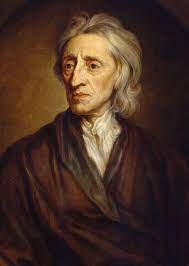
John Locke’s discussion of happiness and pleasure in An Essay Concerning Human Understanding offers an early example of the persistence of the good. In the “Of the Idea of Power” chapter, Locke defines happiness as “pleasure…of the mind as well as the body.” He continues:
Happiness, then, in its full extent, is the utmost pleasure we are capable of, and misery the utmost pain; and the lowest degree of what can be called happiness is so much ease from all pain, and so much present pleasure, as without which any one cannot be content. Now, because pleasure and pain are produced in us by the operation of certain objects, either on our minds or our bodies, and in different degrees; therefore, what has an aptness to produce pleasure in us is that we call good, and what is apt to produce pain in us we call evil; for no other reason but for its aptness to produce pleasure and pain in us, wherein consists our happiness and misery.
Defining happiness as pleasure and the escape from pain, Locke’s account of happiness here might be contrasted with the eudaimonic tradition, which locates happiness in the exercise of virtue and a well-lived life. Like his predecessor Thomas Hobbes, Locke claims that we associate the language of good and evil with the experiences of pleasure and pain. The objects that produce pain we call evil, and those that promote pleasure we call good.
Also like Hobbes, Locke stresses the subjective nature of pleasure and happiness. Locke writes that “the mind has a different relish, as well as the palate,” so “every one does not place his happiness in the same thing.” Happiness thus risks becoming understood as an arbitrary choice between pizza or sushi. There cannot be a singular definition because different people find pleasure in different things.
The palate principle may place certain limits on what we enjoy. Whatever our tastebuds, drinking a gallon of bleach can be fatal. Nevertheless, Locke’s attention to the “different relishes” of the mind would seem quite compatible with a project of economic and political decentralization. Because different people like different things, they should be able to pursue their own desires. And it is precisely in this chapter of the Essay that Locke invokes the “pursuit of happiness”—a phrase that reminds us that Jefferson and other founders read the Essay as well as, and probably more than, the Second Treatise of Government.
The difference in palates points toward the benefits of the market economy, in which discrete economic actors make choices for themselves. One person could spend her paycheck on a trip to Disney World, while another might buy a luxury hot tub. The subjective nature of happiness might also imply that a government seeking to maximize the happiness of its populace could not do so by imposing some particular vision of the “good life” at the national level. Instead, a decentralized approach would be most compatible with public happiness.
Yet reducing happiness to mere differences in palates may have radical implications. If good and evil are simply what we find pleasant and unpleasant and we find pleasure (and, likely, displeasure) in different things, then might not good and evil themselves be simply subjective? Locke is acutely aware of this potential for subjectivism. In his Essay and other works, therefore, he stresses the importance of religious ideas as a way of regulating our pursuit of pleasure.
Later in the Essay, Locke offers the afterlife as a way of distinguishing between different types of pleasures: “Were all the concerns of man terminated in this life, why one followed study and knowledge, and another hawking and hunting: why one chose luxury and debauchery, and another sobriety and riches, would not be because every one of these did not aim at his own happiness; but because their happiness was placed in different things.” In other words, rewards and punishments in the life to come instruct us in which pleasures are worth pursuing, and which are to be avoided. Locke echoes this theme in The Reasonableness of Christianity. He says that “the view of heaven and hell” is the only foundation upon which “morality stands firm.” While people may indeed find different pleasures in different things, the light of Heaven and the flames of Hell would provide illumination that transcends particular taste. Everyone would seek to enjoy eternal bliss or escape eternal misery.
Locke appeals to religious tropes elsewhere in his Essay in proposing the idea of moral pleasure and pain. He writes that “moral good and evil, then, is only the conformity or disagreement of our voluntary actions to some law, where by good or evil is drawn on us, from the will and power of the law-maker.” The pleasure that comes from following such moral law, or the pain that follows from breaking it, is called a reward or a punishment, respectively. While public opinion or public authorities may provide some laws, the first source Locke lists for laws is “the divine law.” God’s infinite power allows Him to “enforce…by rewards and punishments” divine moral commandments. Indeed, the importance of a divine backstop permeates Locke’s work. Atheists are pointedly excluded from toleration in his Letter Concerning Toleration because those who don’t believe in an afterlife can’t be trusted to keep their promises. “Promises, covenants, and oaths, which are the bonds of human society, can have no hold upon an atheist. The taking away of God, though but even in thought, dissolves all.”
Paradoxically, Locke’s reduction of happiness to pleasure and pain along with his emphasis on the subjective nature of both may increase the importance of religion. If we have no shared standard of happiness or flourishing, we need a higher being to impose one on us all. For Locke, God’s authority provides the ultimate grounding for our determinations of the good. Punishment or reward in the afterlife is the ultimate currency of pleasure.
Go the Greek Way
In his 1859 essay On Liberty, John Stuart Mill follows the implications of different palates of pleasure. On Liberty famously celebrates the cultivation of individuality, in which the person goes his or her own way despite the rules of custom and convention. For those who have “any tolerable amount of common sense and experience,” a person’s “own mode of laying out his existence is best, not because it is the best in itself, but because it is his own mode.”
The definition of the best simply as one’s own seems a clarion call for an ethics of autonomy. Throughout On Liberty, Mill warns about the dangers of social consensus as a restriction on free debate and the expression of individuality. Developing our own individuality, in all its particularity and eccentricity, becomes a positive good, and allowing for people to have the potential for such development is a key political aim. Like Alexis de Tocqueville, Henry David Thoreau, and 19th Century contemporaries, Mill fears that elements of modern life threaten individual cultivation.
Yet some sense of the good still haunts Mill. Locke appealed to some afterlife as a necessary perspective on pleasure. A consistent critic religion, Mill offers a more overtly secular account of value. In the midst of the chapter celebrating individuality, Mill observes that “there is a Greek ideal of self-development.” He argues that it is “better” to be the great Athenian statesman Pericles than either Alcibiades, the ferociously ambitious Athenian general who betrayed his city during the Peloponnesian War, or John Knox, the Calvinist reformer.
On Liberty buzzes with praise for energy. Vigorous spirits, great passions, and the like help promote the cultivation of individuality. Yet individuality need not mean anything goes. Mill’s appeal to Pericles as “better” may in part be a reference to a specific vision of character or virtue. True, Mill does not specify what he means by this “Greek ideal of self-development.” Yet ancient Greek traditions of self-development often insisted upon cultivating the virtues as well as nourishing the capacities of reason and athleticism.
Mill’s discussion of pleasure in Utilitarianism, published a few years after On Liberty, reveals the way that Mill, too, sought a stable principle to regulate personal taste. Utilitarianism starts from the premise that the greatest ethical aim is the expansion of happiness, which is defined as “pleasure, and the absence of pain.” Thus, “pleasure, and freedom from pain, are the only things desirable as ends.” However, Mill soon complicates this simple arithmetic of pleasure and pain by locating qualitative differences between pleasures. Some pleasures are higher and more worth enjoying than others. And enjoyment is not to be confused with uninterrupted contentment: the pursuit of higher pleasures render us more vulnerable to certain kinds of pain. As Mill memorably puts it, “better to be a human being dissatisfied than a pig satisfied; better to be Socrates dissatisfied than a fool satisfied.” The “higher faculties” that make a person capable of experiencing elevated joys also may provoke “more acute suffering.”
Mill reveals his interest in a stable good in his critique of Jeremy Bentham’s claim that the game of push-pin was (in Mill’s words) “as good as poetry” (Bentham actually wrote “of equal value”). Mill claims that Bentham made such an error because he had only cultivated the moral side of his character—and did not recognize the importance of the aesthetic and the sympathetic faculties. That distortion in Bentham’s character thus damaged his philosophical judgement. Mill’s vision of self-cultivation on the model of Pericles or Socrates is more a bootcamp than a playground.
Mill’s criterion for distinguishing between different kinds of pleasures appeals to experience rather than any particular schematic of virtue: if those who have experienced two different pleasures prefer one pleasure to the other (even if it entailed some discomfort), that choice would indicate which pleasure was better. Nevertheless, Mill’s sense of higher and lower pleasures seems deeply influenced by a mix of classical and Romantic ideals. Mill doesn’t encourage readers simply to do what feels good. He appeals to the cultivation of judgment, the nurturing of sensitivity, the ability to take on duties, and the pursuit of learning. In light of that ethic of elevated goals, it’s not surprising that a number of prominent scholars—including Martha Nussbaum and Kwame Anthony Appiah—have seen Aristotelian themes in Mill, despite his rejection of nature as a standard of human conduct. Unlike Locke, Mill does not base his sorting of pleasures on the rewards and punishments of a divine lawmaker. But he still appeals to some broader account of a good life in order to organize those pleasures.
That sense of flourishing may even cash out in public policy. In a section of On Liberty, Mill criticizes taxing stimulants “for the sole purpose of making them more difficult to be obtained.” The choice of pleasures should be up to individuals. But he also writes that, since a state must raise revenue somehow, the state must consider “what commodities the consumers can best spare; and a fortiori, to select in preference those of which it deems the use, beyond a very moderate quantity, to be positively injurious.” Opposing taxation as a vehicle for shaping consumer preferences would seem like Mill at his most libertarian, but he also insists that policymakers must calculate which goods are most necessary for consumers and which are injurious for them when thinking about taxing commodities. Thus, even Millian policymakers cannot entirely evade questions of flourishing (and, thereby, the good).
Good Vision
The three intertwining essays that comprise Iris Murdoch’s 1970 volume The Sovereignty of Good reformulate both the person and freedom in their explication of the good. Throughout these essays, Murdoch assails models of the self that present it as an atomistic agent defined by its will. That self is “free, independent, lonely, powerful, rational, responsible, [and] brave.” For this understanding of the person, the will “is the creator of value.”
Murdoch calls the unmoored self the “ideal citizen of the liberal state” and says that the “proper name” of such a self is Lucifer. At another point in the same book, Murdoch returns to satanic iconography. In her discussion of “existentialist thinking,” she says that such a mode of thinking is “either optimistic romancing or else something positively Luciferian. (Possibly Heidegger is Lucifer in person.)” Lucifer is thus both “the ideal citizen of the liberal state” and (possibly) Martin Heidegger, the pathbreaking German philosopher who defended the Nazi regime. The comparison seems paradoxical, but there is a connection. A model of freedom anchored in the unleashing the will might ultimately justify the despotism of the strongest.
Yet Murdoch is also a defender of liberalism—in a certain sense. While she deplores the voluntarist conception of the self, she does write that one thing “in its favor [is] that this image of human nature has been the inspiration of political liberalism.” Thus “political liberalism” might be a good thing, even if this paradigm of the self is mistaken. In The Sovereignty of Good, Murdoch offers a rearticulation of the person in order to show how attending to the good might create a more robust sense of freedom.
In the essay “The Idea of Perfection,” Murdoch dismisses the idea that the good is “depend[ent] upon the will and choice of the individual”—that the good is what seems pleasant to us. Instead, she offers the good as a guiding concept so vast that it transcends our ability to know it granularly. Our apprehensions of the good are always incomplete and demand an ever-keener eye. Rather than reducing freedom to the assertion of the self-making will, she instead bases freedom on the quest for a truer perception that always demands that we revise our understandings of ourselves.
For Murdoch, we need to cultivate the habits of attention to counteract an inherent tendency toward selfishness and illusion. Although it’s a kind of discipline contrary to our inclinations, such attention helps deliver us into freedom. An example that runs throughout “The Idea of Perfection” is a woman attempting to see her (initially annoying) daughter-in-law more justly and more lovingly. “Love is the knowledge of the individual,” Murdoch writes, and knowing better revises our perceptions. Through small, continuous acts of attention, we come to reconceive the world around us and thereby transform our structure of choices.
Murdoch elaborates on these points in “The Sovereignty of Good Over Other Concepts.” The good stands outside us, and, as we escape our illusions and come to know more of reality, a revised understanding of the good helps us reevaluate our viewpoints. Freedom becomes understood as “the disciplined overcoming of self” rather than the ability to assert oneself (or, as Murdoch phrases it, “an inconsequential chucking of one’s weight around”). In place of freedom defined by power or the ability to use power, Murdoch instead centers freedom on receptivity and self-transcendence.
In contrast to a tradition that identifies the good with personal preference, Murdoch turns to the Platonic symbol of the good as the sun. Rather than a projection from ourselves, the good instead illuminates us and the greater world. Questing after the good does not efface the individual but instead can be seen as part of the attempt to know an individual well. There is an echo here of Mill, who insisted that the good cannot be an excuse for stifling the particularity of each person.
Murdoch’s sense of the good as self-revision has certain affinities with Locke, too. In his Essay, Locke grapples with how we assess different desires and why we sometimes choose things that make us miserable. Suggesting the importance and difficulty of the issue, Locke revises this discussion over multiple editions. Eventually, he settles on the theory that humans’ desires are driven by uneasiness—either for some nearby good or in avoidance of some pain.
“Present pain” often seems more pressing than some “absent good,” so we tend to avoid what seems unpleasant to us. Yet this aversion from immediate discomfort can cause us to make decisions that will later cause unhappiness. The possible deceptions of desire cause Locke to recast liberty as the ability to inspect and judge our desires, rather than immediately getting what we want. The capacity to “suspend the execution and satisfaction of desires”—to “examine, view, and judge of the good or evil of what we are going to do”—becomes essential for human liberty. Centuries apart, Locke, Mill, and Murdoch see liberating possibilities in the ability to look within.
Back to the Good
The persistence of the good through centuries of philosophical debate has implications for understanding liberty today. Through technological revolution, modernity has expanded our opportunities for pleasure, understood both as relief from hardship and as the proliferation of amusements. It may thus be tempting to reduce modernity from the “pursuit of happiness” to what Leo Strauss called the “joyless quest for joy”: to the endless (and ultimately immiserating) search for ever-new horizons of pleasure. A life of digitized pornography and pharmacological pacification—poised between polar extremes of brutal meritocratic competition and dropping out of work—would seem the apotheosis of this vision.
Recovering the broader historical legacy of the good complicates this diagnosis of modernity. Rather than reducing all judgments to personal taste or unleashing the will, some of the most influential modern writings on liberty insist that our search for pleasure and exercise of will must be placed within a moral framework that isn’t wholly determined by our own preference or choice. In that respect, we are still haunted by the good.
The recognition of the conceptual importance of some “good” for the exercise of liberty does not, of course, resolve the question of what that “good” might be. For instance, people dispute whether the secular self-cultivation championed by Mill is a sufficient basis for a sustainable free society. Like Locke, many contend that some religious bulwark is also needed. Murdoch claims to base her argument on atheist premises and a denial that human beings have a telos (some final end). Yet her discussion of the good remains saturated with the imagery and assumptions of Christianity. As they have for millennia, different accounts of the good provide fodder for deep philosophical disputes.
Recognition of the good underlines the significance of institutions and practices of ethical formation. Parenting, educational institutions, and religious structures play a crucial role for ethical development—even when they don’t all agree on what the good is. For instance, a public culture that celebrates religious contributions to public life (rather than confining religion to something that happens once a week behind closed doors) could help support a greater architecture of freedom. As Rita Koganzon has argued, Locke’s writings on education emphasize the importance of families characterized by strong parental authority. By instructing their children in thick commitments, parents would help them develop a sense of self-control, in part so that they could resist the tyranny of effervescent public opinion.
It is a truism of American discussions of liberty that ethical cultivation plays an important role for sustaining a free society. John Adams famously wrote that the American Constitution was fit only for a “moral and religious People.” Yet this tradition of the good suggests that the good is not only an effectual aid to the institutions of self-government but it also plays an important role in making our exercise of liberty coherent. More than a mere adjunct to freedom, attending to the good might be a core part of liberty.
About The Author
